

Why Are Short Term Furnished Rentals in Manhattan Harder to Find Than You Think?
Finding short term furnished rentals in Manhattan can be more complex than expected because NYC law, building rules, and taxes all shape what is legally available. For professors, researchers, post-docs, and visiting scholars, the most reliable path is usually a furnished stay of 30 days or more through a trusted academic community. SabbaticalHomes.com, A Place for Minds on the Move, supports respectful rentals, exchanges, tenant listings, and house sitting arrangements built on privacy and trust. Rentals with house sitting duties are the most prevalent model and a cornerstone of the community since 2000.
Finding short term furnished rentals in Manhattan is genuinely difficult — and not just because of high demand. NYC has strict legal rules that limit your options, and building policies can make things even more complicated.
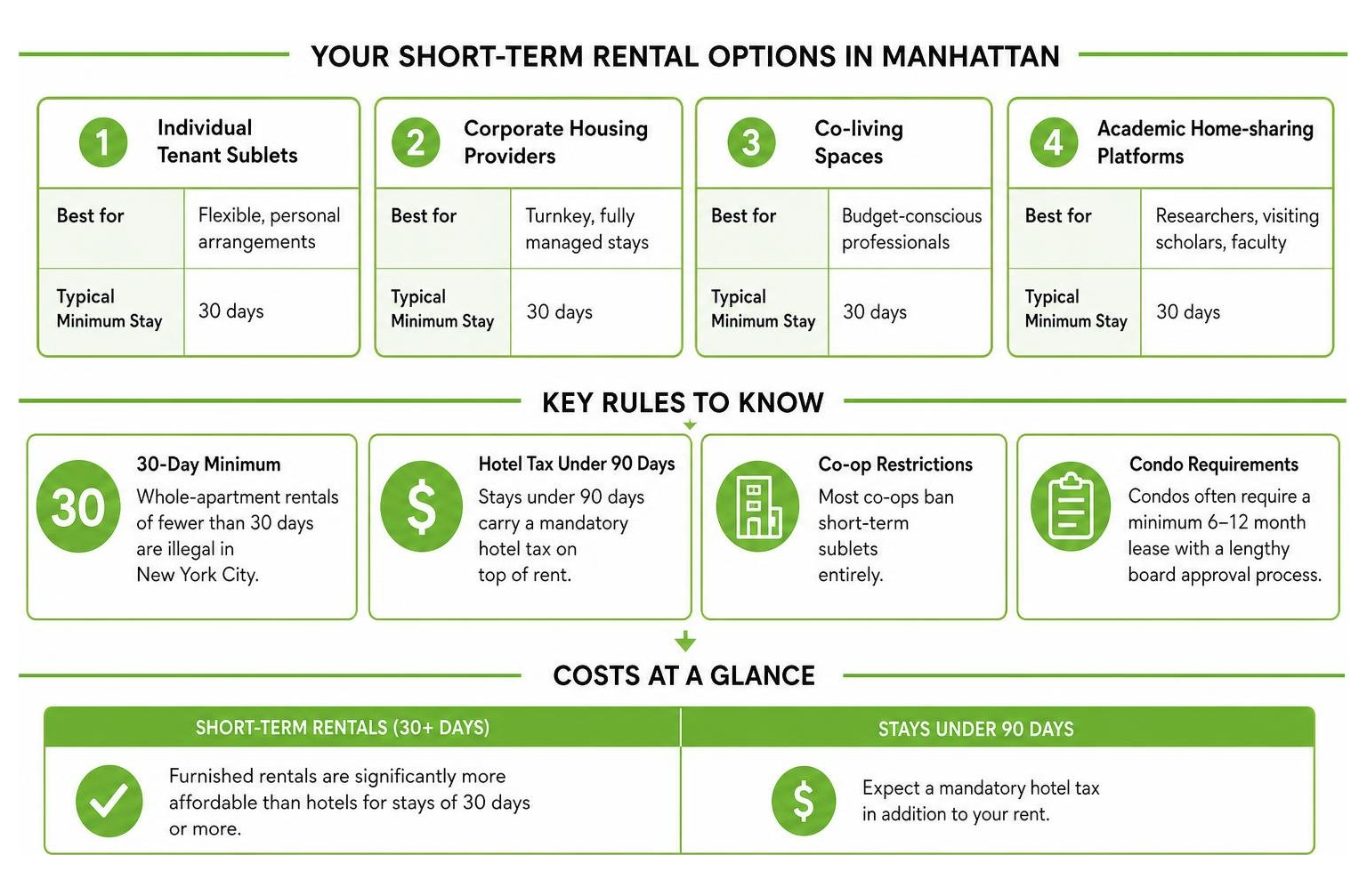
Here is a quick overview of your main options:
| Option | Best For | Typical Minimum Stay |
|---|---|---|
| Individual tenant sublets | Flexible, personal arrangements | 30 days |
| Corporate housing providers | Turnkey, fully managed stays | 30 days |
| Co-living spaces | Value-focused professionals | 30 days |
| Academic community rentals and exchanges via SabbaticalHomes.com | Researchers, visiting scholars, faculty, and house sitting arrangements | 30 days |
The most important thing to know first:
- Whole-apartment rentals of fewer than 30 days are illegal in New York City
- Stays under 90 days carry a mandatory hotel tax on top of rent
- Most co-ops ban short-term sublets entirely
- Private apartment developments often require a minimum 6- to 12-month lease with a lengthy approval process
The good news? For stays of 30 days or more, furnished rentals are significantly more affordable than hotels, and there are reliable, legal options available once you know where to look.
Understanding the legal landscape, true costs, building rules, and the most reliable approaches allows you to find a safe, comfortable home base for your research or fellowship without stress.
Understanding Legal Rules and Costs for Short Term Furnished Rentals in Manhattan
Navigating temporary housing across New York City requires an understanding of municipal housing codes, state tax mandates, and private building guidelines. The Manhattan residential housing market operates under tighter legal scrutiny than almost any other major metropolitan area. For visiting faculty, research fellows, and scholars taking temporary posts at institutions like Columbia University or New York University, understanding these frameworks is essential before signing a lease or sending a deposit.
Since 2000, SabbaticalHomes has been a trusted resource for academics and scholars seeking affordable, short-term furnished housing options, leveraging firsthand expertise to address the unique challenges of finding reliable accommodation. Whether you are seeking a quiet brownstone apartment in Greenwich Village or a high-rise accommodation in Midtown, knowing how the law governs short term furnished rentals in Manhattan will save you time, stress, and expense.
Legal Requirements for Short Term Furnished Rentals in Manhattan
The legal landscape in New York City shifted dramatically with the strict enforcement of Local Law 18 (the Short-Term Rental Registration Law). Under this legislation, unhosted short-term stays in residential apartments for fewer than 30 consecutive days are strictly prohibited.
To maintain compliance when seeking short term furnished rentals in Manhattan, you should keep the following regulatory rules in mind:
- The 30-Day Minimum Rule: Whole-apartment arrangements must last for at least 30 consecutive days. Any residential rental under 30 days where the primary resident is not present is illegal under city housing maintenance codes.
- Hosted Stays Restrictions: Hosted stays under 30 days require the host to be present in the home for the entire duration of the stay. Additionally, hosted stays limit the occupancy to a maximum of two paying guests, who must have unobstructed access to all common areas of the residence.
- Short-Term Occupancy Taxes: Leases lasting less than 90 days are legally subject to local administrative taxes, including a mandatory hotel room occupancy tax percentage plus a daily unit charge. Property owners offering legal stays under three months must collect and remit these taxes to the municipal tax authority.
- Primary Lease & Subletting Approvals: Individual tenants who sublet their homes must hold a primary lease that explicitly permits subletting. Furthermore, the master landlord or legal property owner must grant formal written authorisation prior to any subletter moving into the premises.
For academic travellers relocating for a semester, sabbaticals, or extended research visits, opting for a lease duration of 30 days or longer completely avoids the legal grey areas of nightly hosted stays. You can explore our broader listing directory to secure lawful, long-stay arrangements.
Comparing Monthly Costs Against Hotel Stays
When residing in Manhattan for a month or longer, hotel accommodation quickly becomes financially impractical. High nightly lodging rates, mandatory resort or facility surcharges, and municipal hotel taxes make extended hotel stays extremely costly. Beyond the financial impact, extended hotel living lacks essential comforts such as a fully equipped kitchen, separate working space, and high-speed home Wi-Fi suitable for academic writing.
In contrast, fully furnished monthly rentals offer structured lease pricing that delivers substantial overall savings for multi-week stays. Standard furnished studios and one-bedroom units provide dedicated living areas, home offices, and private kitchen facilities.
When budgeting for monthly furnished housing, consider the following structural cost factors:
- Inclusive Utility Packages: Many academic listings and managed furnished homes include high-speed internet, water, and heat within the fixed rent. However, some providers add electricity caps or seasonal heating fees, so it is important to clarify these details upfront.
- Seasonal Market Variations: Pricing fluctuates throughout the calendar year. Booking temporary housing during off-peak winter months (January through March) often yields better rates and wider availability compared to peak summer and early autumn move-in periods.
- Upfront Billing Surcharges: Certain managed housing agencies offer tier-based pricing models where paying for the entire term upfront reduces the monthly cost, whereas month-to-month billing structures include premium administrative surcharges.
For visiting scholars looking for stability during a term, furnished housing provides a living environment tailored for productive research stays.
Navigating Co-op and Building Policies
In Manhattan, residential real estate is heavily composed of cooperative housing (co-ops) and residential apartment complexes, each with strict internal governance rules regarding temporary occupancy.
Co-op developments are owned by residential corporations where residents hold shares corresponding to their units. Co-op boards exercise extensive control over who resides in the building. Most co-op boards ban subletting completely, or require shareholders to live in the building for several years before applying to sublet. Even when permitted, co-op subleases typically require standard board application fees, background checks, personal references, and formal board interview approvals that can take four to six weeks to complete.
Rental apartment developments managed by professional management agencies offer a far simpler pathway for temporary stays. Provided the primary tenant secures formal written permission from the building manager and adheres to the 30-day legal minimum, subleases in rental developments can be arranged directly and efficiently.
How to Secure Short Term Furnished Rentals in Manhattan
Given the competitive nature of the Manhattan housing market, finding legitimate short term furnished rentals in Manhattan requires vigilance and methodical vetting. Fraudulent listings often target non-local scholars, visiting professors, and relocating professionals who are unable to inspect apartments in person prior to arrival.
To protect your deposit and guarantee a lawful housing arrangement, follow this thorough verification procedure before transferring any funds or signing a contract:
- Confirm Property Ownership & Master Lease Rights: Ask the host or primary tenant for proof of property ownership or a copy of their master lease. Verify that the primary lease explicitly allows subletting or short-term home sharing.
- Obtain Written Landlord Consent: Never rely solely on verbal promises from an existing tenant. Ensure the building owner or property management firm provides signed, written consent authorising your specific stay dates.
- Review Detailed Floor Plans and Virtual Tours: Request a live video walk-through or detailed floor plans featuring specific architectural details. Cross-reference interior photography against street-view imagery to confirm exterior window views match the building’s physical address.
- Inspect Itemised Fee Structures: Verify whether the initial price quote includes all mandatory charges. Watch out for hidden line items such as move-in administrative fees, move-out deep cleaning surcharges, or utility overage deposits.
- Use Formal Written Contracts: Never execute financial transactions through unverified peer-to-peer wire transfers or cash apps. Demand a formal written occupancy agreement detailing the start and end dates, security deposit refund terms, house rules, and included furnishings.
Related: Home Rental, Home Exchange, & Vehicle Use Agreement Guidelines
If your arrangement includes house sitting duties, confirm the expectations in writing as well. Within the SabbaticalHomes academic community, rentals with house sitting duties are the most prevalent model and a cornerstone of the community since 2000. These arrangements commonly involve practical household help such as garden care, mail collection, or pet care, forming part of a home rental, home exchange, or tenant listing rather than a strictly rent-free arrangement.
Conclusion: Finding Your Ideal Academic Home in Manhattan
Finding suitable, legal short term furnished rentals in Manhattan does not have to be overwhelming. While strict city regulations like Local Law 18 and complex building policies present unique hurdles, understanding these boundaries ensures you can secure a legal, comfortable home base for your research or teaching post.
By prioritising stays of 30 days or longer, verifying master leases, clarifying any house sitting responsibilities, and dealing directly with trusted property hosts, you can enjoy all the cultural and academic richness New York City has to offer without the stress of housing uncertainty.
At SabbaticalHomes, we remain dedicated to serving our international community of scholars, researchers, and faculty members. Whether you are seeking a quiet apartment near Morningside Heights, a light-filled workspace in Greenwich Village, or a full home exchange, our specialised network offers respectful, like-minded matches around the globe. Explore our active listings for in New York, New York today to discover your next home away from home.
Let us know what you think! Connect with us on X, LinkedIn, Facebook, Instagram, YouTube and Pinterest.