

This guide provides a comprehensive overview of the premier platforms for academic sabbatical housing, focusing on specialized resources like SabbaticalHomes.com. We examine the benefits of guest houses, essential amenities for research productivity, and strategies for navigating international relocations. By exploring budgeting models, trust-building measures, and the prevalence of house sitting arrangements, scholars can secure ideal environments for deep work. This roadmap ensures that academics find reliable, affordable, and inspiring homes tailored to their unique professional requirements during research leaves and fellowships, avoiding the pitfalls of generic travel sites.
The best websites for academic sabbatical housing are platforms that specialize in connecting scholars with furnished, temporary homes near universities. Here are the top options:
| Platform | Best For | Cost Model |
|---|---|---|
| SabbaticalHomes | Rentals, exchanges, house sitting for academics | Low annual fee + $50 Made-a-Match fee |
| University housing offices | On-campus or affiliated short-term stays | Varies by institution |
| Facebook groups (university-specific) | Vetted sublets from fellow scholars | Free to browse |
| HERC partner resources | Faculty relocation and recruitment stays | Varies |
Finding the right temporary home for a sabbatical, fellowship, or research trip is one of the most stressful parts of academic travel. The housing market rarely caters to scholars who need a furnished flat for three to six months, close to a specific campus, at a reasonable price, with a trustworthy host who understands research schedules. General platforms like Airbnb are built for tourists, not researchers. University dorms can be expensive and rarely include a kitchen or dedicated workspace.
Why Guest Houses are the Superior Choice for Scholars
When we search for websites for academic sabbatical housing, we often overlook the “middle ground” between a sterile hotel and a complex apartment lease. Guest houses—often referred to as casitas, cottages, or carriage houses—offer a unique sanctuary for the academic mind. Unlike hotels, which are designed for transient comfort, a guest house provides a lived-in, serene environment conducive to “deep work.”
The primary advantage is privacy. A detached garden cottage or a converted carriage house allows a researcher to spread out books and papers without the daily interruption of housekeeping or the noise of hotel corridors. Furthermore, guest house hosts are frequently affiliated with the local university or are “minds on the move” themselves. They often act as informal local guides, recommending the quietest coffee shops or the best-hidden archives in the city.
| Feature | Guest House | Hotel/Apartment |
|---|---|---|
| Privacy | High (often detached units) | Low to Medium |
| Workspace | Often includes a dedicated desk | Limited/Small desk |
| Host Interaction | Personal, academic-focused | Corporate or non-existent |
| Lease Flexibility | High (direct negotiation) | Rigid (contracts/daily rates) |
The Psychological Benefits of a Dedicated Sanctuary
For scholars, the environment is not merely a place to sleep; it is a cognitive extension of their research. A guest house provides the psychological boundary needed to separate domestic life from intense intellectual labour. In cities like Oxford or Cambridge, these spaces are often historic annexes that have housed generations of thinkers. The silence of a garden setting allows for the sustained focus required to complete a monograph or analyze complex data sets.
Moreover, the “family-run” nature of these accommodations means that the host understands the rhythms of the academic year. They are unlikely to schedule noisy renovations during finals week or the peak of the summer research season. This mutual respect for the scholarly process is a hallmark of the community found on SabbaticalHomes. Whether it is a pool house in Los Angeles or a basement suite in London, these spaces offer a level of authenticity that corporate property management cannot replicate. They provide the human connection that is increasingly rare in the digital age, paired with the genuine privacy required for scholarly output.
Essential Amenities for Productive Sabbaticals
A successful sabbatical requires more than just a bed; it requires a functional satellite office. When browsing websites for academic sabbatical housing, we must look beyond the aesthetic and focus on productivity-enhancing amenities. Reliable Wi-Fi is the baseline, but for many researchers, a wired Ethernet connection is a premium necessity for handling large data sets or stable video conferencing. Proximity to campus is another non-negotiable factor. Ideally, your housing should be within a 5-to-20-minute walk or a short commute via university-specific shuttles.
Key amenities to verify before booking:
- Quiet Hours: Standard academic courtesy usually dictates quiet hours from 10 PM to 8 AM.
- Lighting: Adequate task lighting for late-night writing and reading.
- Kitchen Access: Essential for long-term stays (avoiding the “linen pack” and meal plan costs of university dorms).
- Work Surface: A dedicated desk and ergonomic chair, rather than a kitchen table.
Ergonomics and the Scholar’s Health
Long hours of writing can take a toll on physical health. When evaluating listings, look for photos that show a proper desk setup. A kitchen chair and a laptop on a dining table are insufficient for a six-month fellowship. Many hosts on SabbaticalHomes are academics themselves and often provide ergonomic chairs, standing desk converters, or even second monitors.
Additionally, natural light is a vital amenity. A basement flat might be affordable, but the lack of Vitamin D and natural circadian cues can hinder productivity over a long winter in a city like Berlin or Chicago. Prioritize spaces with large windows or access to outdoor areas. If you are a scientist who needs to be in the lab at odd hours, ensure the neighborhood is well-lit and safe for late-night walking. These small details, often overlooked on tourist-centric sites, are the focus of specialized websites for academic sabbatical housing.
Navigating Websites for Academic Sabbatical Housing Effectively
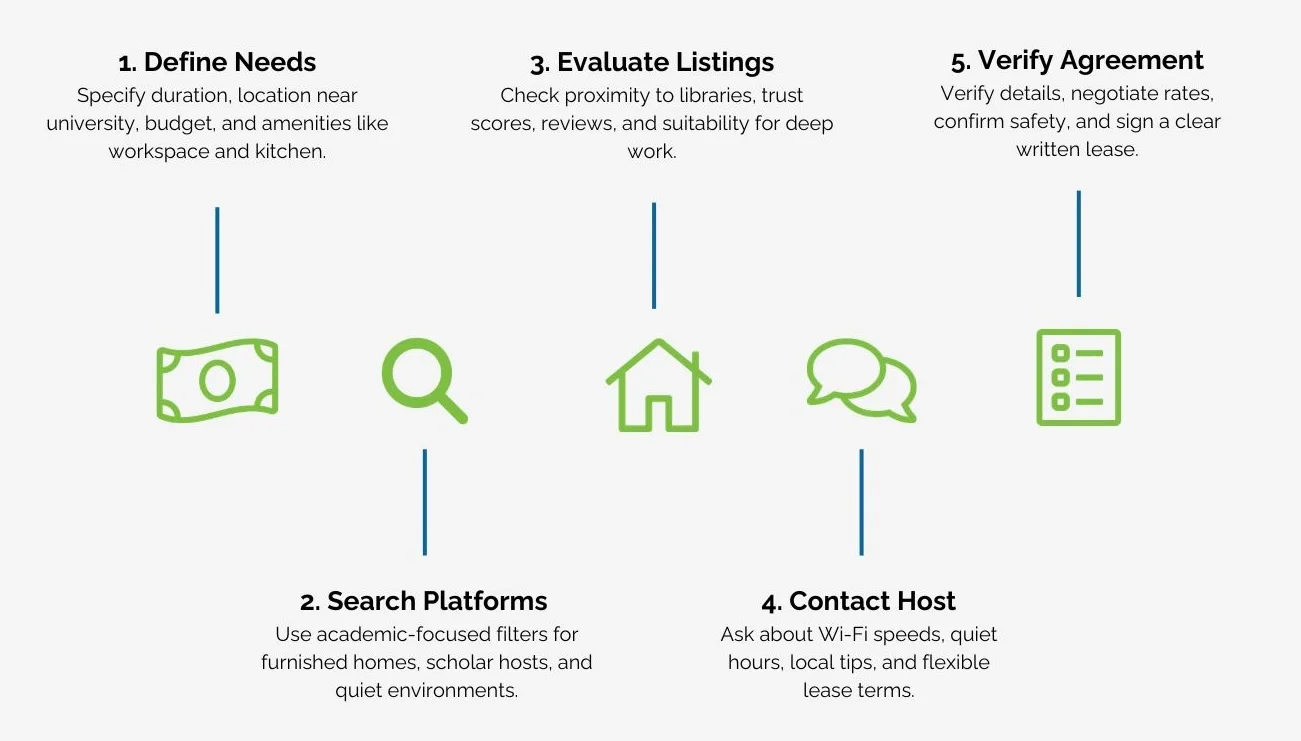
To find the perfect match, we recommend a multi-channel approach. Start by using specific search filters on specialized platforms. Look for “Faculty-offered homes” or “Writing Sanctuaries” to ensure you are entering an environment that values silence and study. On SabbaticalHomes, we use a “Trust Score” system. This allows members to demonstrate their connectivity within the academic community while maintaining their identity privacy. Unlike commission-based sites, we operate on a flat-fee “Made-a-Match” model, ensuring that the independence of the arrangement remains with the scholars themselves.
For a deeper dive into the process, read more about Finding the Perfect Academic Housing Abroad. This resource helps you move from the initial search to a signed agreement with confidence. You can also explore Home Sharing opportunities if you prefer a more collaborative living environment.
The Role of House Sitting in the Academic Community
When discussing house sitting, it is important to note that rentals with house sitting duties are the most prevalent model and a cornerstone of the community since 2000. This arrangement often involves a scholar staying in a home at a reduced rate in exchange for light duties such as plant watering, mail collection, or pet care. This model is particularly popular among post-doctoral researchers and visiting professors who may be on a tighter budget but are highly responsible and trustworthy. It creates a symbiotic relationship where the homeowner has peace of mind while away on their own research trip, and the guest receives high-quality housing that might otherwise be out of reach. If you are open to caring for a property or a pet in exchange for a more affordable stay, consider House Sitting as a restorative break from intense research.
Using Websites for Academic Sabbatical Housing to Find Writing Sanctuaries
A “Writing Sanctuary” is a property specifically curated for creative inspiration. In cities like Berlin or London, these often take the form of “Altbau” flats—historic pre-war buildings with high ceilings and original features—or modern urban oases with private gardens. These listings often highlight humanities libraries or even a Steinway grand piano as part of the rental.
How Websites for Academic Sabbatical Housing Support University Relocations
University-specific searches are crucial for safety and convenience. For instance, near Leipzig University, the majority of the listings on our platform are furnished, catering to the temporary nature of research trips. In New Haven, near Yale University, it is vital to use geographic safety markers—generally staying north of Trumbull St and south of East Rock Road. By focusing on off-campus housing and vetted sublets, scholars can avoid the high costs and lack of amenities found in university-managed dorms. If you have specific questions about a listing, you can always Contact the host directly to discuss your scholarly needs.
Budgeting and Logistics for International Research Trips
Budgeting for a sabbatical requires a different formula than a standard holiday. We recommend the “33% rule”—spending no more than one-third of your gross income on rent. However, for a comprehensive sabbatical budget, a “55% allocation” model is often more realistic for international relocations. This 55% should cover housing, utilities, and high-speed internet. This higher percentage accounts for the premium paid for furnished, short-term accommodation and the convenience of being near a major research centre.
Hidden Costs and Financial Planning
Don’t forget to factor in an emergency buffer and funds for professional costs (books, conference fees, travel to archives). When renting a guest house or flat, clarify who is responsible for utility bills, as some international listings include “charges” in the rent while others do not. In the UK, for example, Council Tax can be a significant additional expense if not included in the monthly rate.
Currency fluctuations can also impact your budget. If you are a scholar from the Eurozone visiting the United States, a sudden shift in the exchange rate can increase your costs by hundreds of dollars over a semester. We recommend using services that allow you to lock in exchange rates or maintaining a local bank account if your stay exceeds six months. Furthermore, consider the cost of “settling in”—even a furnished flat may require you to purchase basic kitchen staples or specific stationery that you cannot bring in your luggage. By using websites for academic sabbatical housing that offer direct communication with hosts, you can often negotiate a “utility-inclusive” rate to simplify your monthly accounting.
Trust and Safety in the Academic Housing Community
The “glue” of the academic housing market is trust. Because our community is built on shared professional values, we can often bypass the sterile, bureaucratic hurdles of corporate rentals. However, safety remains paramount. Always conduct reference checking and, if possible, schedule a video call with your potential host. Written agreements are essential, even in a peer-to-peer arrangement. These should cover house rules, pet policies, and security deposits.
Our platform remains advertisement-free and independent to ensure we stay true to our mission of serving “Minds on the Move.” By focusing on success-based contributions rather than high commissions, we maintain a community of “top quality humans” who respect both the property and the intellectual pursuit of their guests.
Related: Trust and Safety Between Members
Vetting and Verification Strategies
When using websites for academic sabbatical housing, the vetting process should be thorough. Ask for a university email address or a link to a faculty profile. This simple step confirms the host’s professional standing. On SabbaticalHomes.com, the Trust Score provides a layer of security, but personal due diligence is still encouraged.
Be wary of any host who asks for payment via untraceable methods like Western Union or cryptocurrency. Legitimate academic hosts will typically use bank transfers or established payment platforms. It is also wise to ask for a virtual tour of the property. This not only confirms the listing is real but also allows you to check the noise levels and the actual condition of the workspace. Remember, you are not just renting a room; you are securing the foundation of your research year. A little extra time spent on verification can prevent a significant amount of stress later on.
Related: Checking References
Frequently Asked Questions about Sabbatical Housing
How do guest houses differ from apartment rentals?
Guest houses are usually owner-occupied properties, offering a personal touch and direct negotiation that corporate management cannot provide. While apartments are often managed by third-party agencies with rigid contracts, guest houses offer a “family-run” feel and more flexible lease terms tailored to the academic calendar. This flexibility is vital for researchers whose dates might shift slightly due to grant approvals or archive access.
What are the red flags to watch for when booking?
Be wary of rushed decisions or hosts who pressure you to make off-platform payments before establishing trust. Vague answers regarding the workspace or internet speeds are also warning signs. As a rule, never send a wire transfer to an unverified individual; always use the platform’s secure communication channels to verify the host’s identity. If a deal seems too good to be true for a prime location like Manhattan or Central London, it likely is.
Related: Scam Prevention
Can I bring my family on a sabbatical?
Yes, many listings on SabbaticalHomes.com are family-friendly. However, it is essential to communicate the number of occupants clearly with the host. Some guest houses are strictly for single occupancy due to local zoning laws or space constraints. Always enquire about local schools and parks if you are traveling with children, as academic hosts are often happy to provide recommendations for the best local neighborhoods for families.
Conclusion
Since 2000, SabbaticalHomes has been a trusted resource for academics and scholars seeking affordable, short-term furnished housing options, leveraging expertise to address the unique challenges of finding reliable accommodation. Whether you are seeking a writing sanctuary in Berlin, a sunny cottage near UC Berkeley, or a historic flat in London, our community of “Minds on the Move” is here to support your journey. We value privacy, respect, and diversity, ensuring that you can focus on what matters most: your research and your passion.
Finding the right environment is the first step toward a successful research leave. By utilizing specialized websites for academic sabbatical housing, you gain access to a network of peers who value intellectual work as much as you do. This shared understanding creates a foundation of trust that generic platforms simply cannot match. We invite you to explore the possibilities and find a home that inspires your next great contribution to your field.
Ready to find your next sanctuary? Find your next home away from home today.
Let us know what you think! Connect with us on X, LinkedIn, Facebook, Instagram, YouTube and Pinterest.