

Short term rentals Toronto: Discover 2025’s Best
This guide is designed for academics and researchers navigating Toronto’s temporary housing market. You will learn about the different types of furnished rentals available, discover the most suitable neighborhoods near the city’s major universities, understand the municipal regulations governing stays under 28 days, and receive practical advice for securing a comfortable and compliant home. Whether you are on sabbatical, undertaking a fellowship, or conducting collaborative research, this resource will equip you to find accommodation that is cost-effective and conducive to productive work in one of Canada’s leading intellectual hubs.
Understanding Your Options: Academic Rentals in Toronto
For any academic visit, securing the right living arrangement is fundamental to your productivity and overall experience. A furnished rental provides a genuine home base for intellectual pursuits, offering distinct advantages that a hotel room cannot replicate.
These properties afford significantly more space and privacy, with separate areas for living, working, and sleeping. This separation is a considerable benefit over a single hotel room, allowing you to establish a routine and live comfortably rather than merely staying somewhere temporarily. Practical amenities, such as a full kitchen and in-suite laundry, offer the convenience of home, freeing you to concentrate on your research rather than daily logistics. Cooking your own meals helps maintain a healthy routine and manage expenses, while on-site laundry saves valuable time and money.
For stays extending over several weeks or months, furnished rentals are demonstrably more cost-effective than hotels, which apply premium nightly rates that accumulate quickly. With a rental, you are paying for functional living space and the essential tools for your work, not for daily services you may not require. Furthermore, residing in a residential neighborhood fosters an authentic connection to the city, enriching your experience in a way a hotel, often situated in a tourist-centric area, cannot.
SabbaticalHomes.com offers a variety of accommodation types tailored to academic needs:
- Downtown apartments or condos are ideal for individuals or couples who value proximity to the University of Toronto, Toronto Metropolitan University, and the city’s major cultural institutions.
- Houses in residential neighborhoods provide more space, often with gardens or patios, making them suitable for academics traveling with family or small research teams.
- Private suites within a larger home offer an excellent balance of independence and affordability, providing a private space with the benefit of a local host nearby.
- Home exchanges present a unique opportunity for full immersion into Toronto life, offering a cost-free accommodation solution built on mutual trust.
Our community of hosts, many of whom have academic backgrounds themselves, understands the specific requirements of scholars. This includes the non-negotiable need for reliable, high-speed internet, a dedicated and comfortable workspace, and a quiet environment conducive to deep work. This shared understanding and alignment of expectations lead to more seamless and satisfying stays.
| Feature | Furnished Rental (via SabbaticalHomes.com) | Hotel |
|---|---|---|
| Cost | More cost-effective for stays beyond a few weeks | Premium nightly rates add up quickly |
| Duration | Flexible arrangements from weeks to several months | Best for brief visits of days to a week |
| Flexibility | Live on your own schedule with few restrictions | Hotel rules and limited personal freedom |
| Space | Separate areas for living, sleeping, and working | Single room with limited square footage |
| Amenities | Full kitchen, in-suite laundry, dedicated workspace, high-speed internet | Restaurant dining, room service, basic desk, often paid Wi-Fi |
| Local Experience | Authentic neighborhood living, integrated into the community | Tourist-focused environment, separated from local life |
What Defines a Short-Term Rental in Toronto?
Before booking your accommodation, it is crucial to understand Toronto’s official definition of a short-term rental, as the city’s regulations are designed to protect its long-term housing supply and ensure guest safety.
The city defines a short-term rental as “all or part of a dwelling unit rented out for less than 28 consecutive days in exchange for payment.” Any stay of 28 days or more is not subject to these specific rules but may fall under other provincial legislation. This definition excludes hotels, motels, and student residences operated by post-secondary institutions. For visiting scholars, this means any property you rent through a platform for a period of less than 28 days must comply with these municipal requirements. You can find complete details on the city’s official website: More info about Toronto’s official definition.
Why Choose SabbaticalHomes.com for Academic and Research Travel?
Your work demands a functional home that supports intellectual pursuits. SabbaticalHomes.com has served the academic community since 2000, connecting scholars with properties designed for the rhythms of academic life.
Listings on our platform frequently highlight features essential for productivity, such as dedicated workspaces, verified high-speed internet capable of handling video conferences and large data transfers, and proximity to universities, libraries, and research archives. The environments prioritize quiet, study-friendly spaces and fully equipped kitchens for self-sufficiency. However, the most significant advantage is our community of like-minded hosts and guests. This global network of scholars, researchers, and academics fosters a unique ecosystem of trust and mutual respect, making for a more secure and pleasant experience. Our goal is to facilitate housing arrangements that directly support your academic work, a commitment reflected in testimonials from our community: Toronto, ON, Canada.
Top Toronto Neighbourhoods for Visiting Scholars
Choosing the right neighborhood is a critical factor in a successful academic stay. Scholars searching for temporary accommodation in Toronto often prioritize proximity to universities, convenient access to public transit, and a welcoming community atmosphere. Toronto’s diverse neighbourhoods offer unique options to suit every need.
The Annex & Yorkville
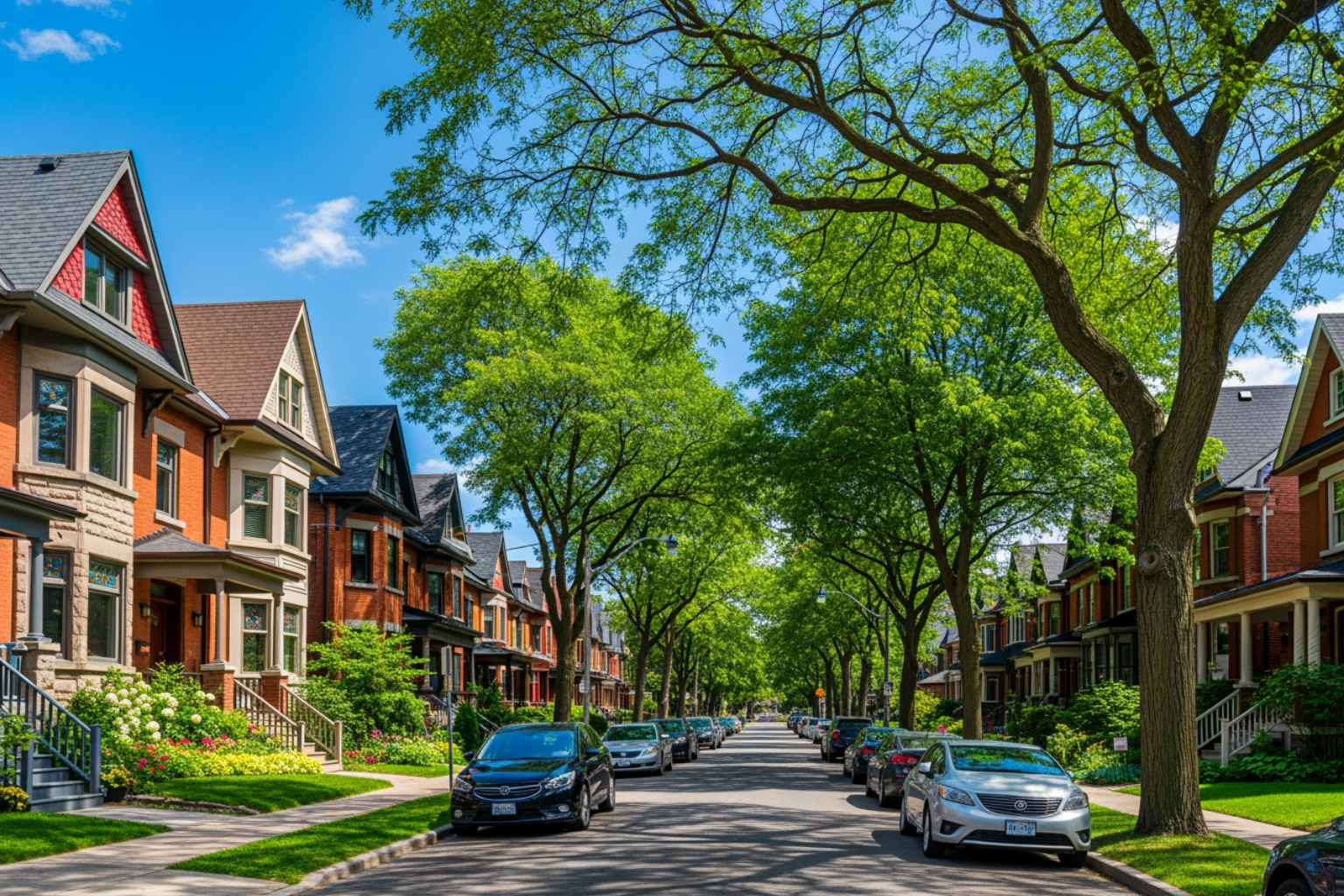
Ideal for those affiliated with the University of Toronto, The Annex is the city’s traditional intellectual heart. Its walkable, tree-lined streets are filled with historic homes, independent bookstores, and cafes that serve as informal meeting spots for students and faculty. Adjoining Yorkville offers a more upscale experience with high-end boutiques and fine dining, but it is also home to the Royal Ontario Museum and the Royal Conservatory of Music, placing you steps from campus and major cultural institutions. Our community members praise these areas for their perfect blend of vibrant urban energy and quiet residential calm. Read about their experiences here: Toronto, ON, Canada.
Downtown Core (including the Financial District)
For scholars needing to be at the centre of everything, the Downtown Core is the perfect choice. It is home to Toronto Metropolitan University and the city’s major teaching hospitals, part of the University Health Network (UHN). The area is a bustling business and cultural hub with unparalleled transit connections via Union Station and multiple subway lines. While it is busier and generally more expensive, its convenience is unbeatable for those whose work in finance, law, medicine, or policy requires a central location.
North York
For academics affiliated with York University, North York offers a more suburban feel with greater space for the cost. It is often more affordable than the downtown core, with larger homes and quieter residential streets. Families particularly appreciate the abundance of parks, community centers, and reputable schools. The Yonge-University subway line provides a direct and efficient connection to downtown, making North York a practical choice for those seeking a balance between ample living space and city-wide accessibility.
Cabbagetown & Leslieville
These east-end neighbourhoods are perfect for academics seeking inspiration and a slightly slower pace. Cabbagetown is renowned for its beautifully preserved Victorian architecture and quiet, contemplative atmosphere, making it an ideal setting for writing retreats or focused research. Further east, Leslieville has evolved into a creative district brimming with art galleries, independent shops, and a celebrated restaurant scene. Both neighbourhoods are well-connected to the downtown core via dedicated streetcar lines and offer an authentic local experience away from the main tourist trails. Community members have shared positive testimonials about these areas: Toronto, ON, Canada.
The West End (High Park & Roncesvalles)
Toronto’s west-end neighbourhoods, such as Roncesvalles and the areas surrounding High Park, offer a family-friendly, community-oriented atmosphere. Roncesvalles, with its distinct Polish heritage, is a charming main street filled with independent grocers, bakeries, and cafes. Proximity to High Park, Toronto’s largest public park, provides unparalleled access to nature trails, sports facilities, and tranquil green space. This area is ideal for scholars traveling with family or those who value a strong sense of local community and outdoor recreation, while still being easily connected to the city centre by streetcar and subway.
Navigating the Rules for Short-Term Rentals in Toronto
Understanding the city’s regulations for temporary accommodation is essential for both guests and hosts. These rules are designed to address pressures on Toronto’s housing supply, ensure guest safety, and maintain the character of residential neighborhoods. For the academic community, compliance is a matter of being a responsible member of the community you temporarily call home.
Toronto’s approach aims to balance the needs of visitors with the necessity of preserving long-term housing. This has created a regulated environment that still welcomes the scholars, researchers, and other professionals who contribute to the city’s intellectual and cultural life.

Operator and Host Regulations
The cornerstone of Toronto’s policy is the principal residence rule. This mandates that hosts can only offer their primary home—the one they ordinarily live in and use for official purposes like taxes and identification—as a short-term rental. This means that investment properties cannot be legally used for stays of less than 28 days. This rule was implemented specifically to prevent residential housing units from being converted into full-time, hotel-like operations, thereby keeping them available for long-term residents.
Every operator must register with the City of Toronto and renew their registration annually. For guests, this is a key indicator of a legal and compliant rental. Every listing must display a City-issued registration number (format: STR-0000-XXXXXX). If you do not see this number on a listing, it should be considered a red flag. For hosts, the City of Toronto provides comprehensive guidance on their responsibilities: Learn more about host requirements.
Understanding the Municipal Accommodation Tax (MAT)
Toronto levies a Municipal Accommodation Tax (MAT) on all stays of less than 28 consecutive days. This tax is a standard practice in many global cities and helps to fund tourism promotion, cultural events, and city services that benefit both residents and visitors. The current rate is 6%, but a temporary rate increase to 8.5% will be in effect from June 1, 2025, to July 31, 2026, to support major city-wide events. Hosts are responsible for collecting this tax from guests and remitting it to the city. It should always appear as a separate line item on your invoice, ensuring transparency.
How to Report Concerns
Toronto provides clear channels for addressing issues related to temporary rentals, ensuring that problems are handled efficiently.
For non-emergency concerns such as excessive noise, improper waste disposal, or a suspected unregistered property, the City of Toronto’s 311 service is the primary point of contact. You can call 311 from within Toronto or use the online complaint portal to file a report. This system ensures your complaint is logged and directed to the correct municipal licensing and standards department for investigation.
It is crucial to distinguish between non-emergency and emergency situations. For a fire, a crime in progress, or a medical emergency, always call 911 immediately. Using the proper channels ensures that all issues are addressed by the appropriate authorities in a timely manner.
A Scholar’s Checklist for Booking a Rental in Toronto
Finding the right accommodation requires more than just booking a place to sleep; you need a temporary home that supports your research, writing, and daily routines. This checklist will help you navigate the booking process with confidence, ensuring your stay is both productive and enjoyable.

Essential Amenities for a Productive Stay
For an extended academic project, certain amenities are non-negotiable. Prioritise listings that explicitly offer:
- High-Speed Wi-Fi: Confirm the connection is reliable and fast enough for video calls, virtual conferences, and transferring large research files. Don’t hesitate to ask the host for current speed test results.
- Dedicated Workspace: A proper desk and an ergonomic chair in a quiet, well-lit area are essential for productivity and well-being during long hours of work.
- In-Suite Laundry: This amenity saves significant time, effort, and money over the course of a longer stay compared to using external laundry facilities.
- Full Kitchen: The ability to prepare your own meals helps you maintain healthy routines, manage your budget, and cater to any dietary preferences.
- Adequate Storage: Ensure there is enough closet and shelf space for your belongings, especially for a multi-month stay.
- Blackout Curtains: Particularly valuable for managing jet lag or if your work requires an unconventional schedule.
- Proximity to Transit: Easy access to the subway (TTC), streetcars, or buses simplifies your commute and city exploration.
Understanding Pricing and Finding Value
Nightly vacation rental rates in Toronto, which can average CAD $507 to $549, may seem high for an academic budget. However, for stays lasting several weeks or months, the economics become much more favorable. As of May 2024, Toronto’s average monthly rent for traditional leases is approximately CAD $2,793. More specifically, one-bedroom units average CAD $2,479, two-bedrooms CAD $3,284, and three-bedrooms CAD $3,638 per month. These figures serve as a better benchmark for negotiating the cost of a longer-term furnished rental.
Costs will vary based on location, size, amenities, and season, with prices typically peaking in the summer months. When searching, focus on the total monthly cost rather than per-night rates. For stays exceeding 28 days, you are not subject to the Municipal Accommodation Tax (MAT), and negotiating a fixed monthly rate directly with a host on a platform like SabbaticalHomes can provide the best value.
Key Questions for Your Host
Clear and thorough communication with your host is the key to a successful stay. Before committing to a booking, be sure to ask:
- Is the property your principal residence and is it registered with the city? Could you please provide the registration number (format: STR-0000-XXXXXX)?
- Can you confirm the Wi-Fi speed and its reliability for video conferencing?
- Could you describe the workspace setup (e.g., desk size, chair type, lighting)?
- How far is it in walking minutes to the nearest grocery store and public transit stop?
- Are there any building rules or quiet hours I should be aware of?
- Is parking available, and if so, what is the associated cost?
- Are all utilities (hydro, heating, water, internet) included in the rental price?
- What is the policy for receiving mail or packages?
- Is there any flexibility with check-in and check-out times to accommodate my travel schedule?
Related: Rental Questions for Prospective Landlords
Frequently Asked Questions about Toronto Rentals
What is the difference between a short-term rental and a longer academic stay of several months?
This is a critical legal and practical distinction. A short-term rental in Toronto is officially defined as a rental for less than 28 consecutive days. These stays are subject to specific City of Toronto bylaws, including the principal residence rule, mandatory registration, and the collection of the Municipal Accommodation Tax (MAT).
Stays of 28 days or more are generally considered longer-term tenancies and may fall under the jurisdiction of Ontario’s Residential Tenancies Act (RTA). The RTA outlines a different set of rights and responsibilities for both tenants and landlords concerning rent increases, eviction, and maintenance. For an extended academic stay, it is vital to have a clear written agreement with your host that specifies the terms of your occupancy to avoid any ambiguity.
How do temporary rentals support Toronto’s academic and local economy?
Furnished rentals for visiting academics provide significant, multi-faceted benefits. They:
- Enable Academic Collaboration: By offering flexible, furnished housing, they make it possible for scholars, researchers, and experts from around the world to teach, study, and collaborate at Toronto’s universities and research institutions.
- Boost the Local Economy: Visiting academics and their families spend money at local businesses, including independent cafes, bookstores, restaurants, and markets, distributing economic benefits directly into residential neighborhoods beyond typical tourist zones.
- Generate City Revenue: The Municipal Accommodation Tax (MAT) collected from these rentals directly funds tourism initiatives, cultural programming, and public services, which in turn benefits all residents.
What are the future trends in Toronto’s rental market for academics?
The market for temporary academic housing in Toronto is continually evolving. Key trends include:
- Increased Regulation and Compliance: The city is focusing on more robust enforcement of its bylaws through measures like annual inspections and data analysis. This is leading to a more stable, predictable, and reliable market for guests.
- Focus on Principal Residences: Strict and ongoing enforcement of the principal residence rule will continue to protect the long-term housing supply, reinforcing the model of home-sharing rather than commercial operations.
- New Housing Types: As Toronto encourages gentle density, innovative housing forms like laneway and garden suites may become a more common part of the rental landscape, offering more diverse and private accommodation options.
- Data-Driven Oversight: The city’s increasing use of data will improve transparency and inform future policies, making it easier for scholars to identify and book legitimate, high-quality temporary homes.
What are common challenges when booking a rental in Toronto, and how can I avoid them?
While Toronto’s market is well-regulated, challenges can arise. The most common issues include misrepresentation of the property and booking scams. To avoid these, always use a trusted, community-based platform like SabbaticalHomes, where hosts and guests are often part of a shared academic network. Scrutinize listings for high-quality photos, detailed descriptions, and reviews from other academics. Never pay a deposit or transfer money outside of a secure platform’s payment system. A host who pressures you for an immediate off-platform bank transfer is a major red flag. Finally, having a video call with the host before booking can help verify their identity and allow you to ask questions face-to-face.
Conclusion: Find Your Academic Home in Toronto
Toronto is a premier global destination for scholars, and finding the right temporary home is the foundation for a successful and productive visit. Furnished rentals offer the ideal blend of independence, comfort, and convenience required for focused academic work, providing a superior alternative to the constraints of a hotel or the inflexibility of a long-term lease.
This guide has covered the benefits of furnished rentals, highlighted top neighborhoods near major universities, and detailed the city’s essential regulations. By understanding these elements, you can confidently navigate the market and find a space that truly meets your professional and personal needs.
For nearly 25 years, SabbaticalHomes.com has been the leading resource for the academic community, connecting minds on the move with furnished, vetted homes. Our platform is built on a foundation of trust and community, ensuring you find not just a rental, but a true home away from home.
As you plan your next academic journey, we invite you to explore your options with us. Find your ideal home for rent or exchange in Toronto and join a community that understands and supports your work: Find your ideal home for rent or exchange in Toronto.
Related Reading:
- How to Find the Perfect Sabbatical Rental: Tips for Academics
- Checking References: The First Step to a Successful Stay
- House Sitting for Academics: What You Need to Know
Let us know what you think! Connect with us on X, LinkedIn, Facebook, Instagram, YouTube, and Pinterest.