

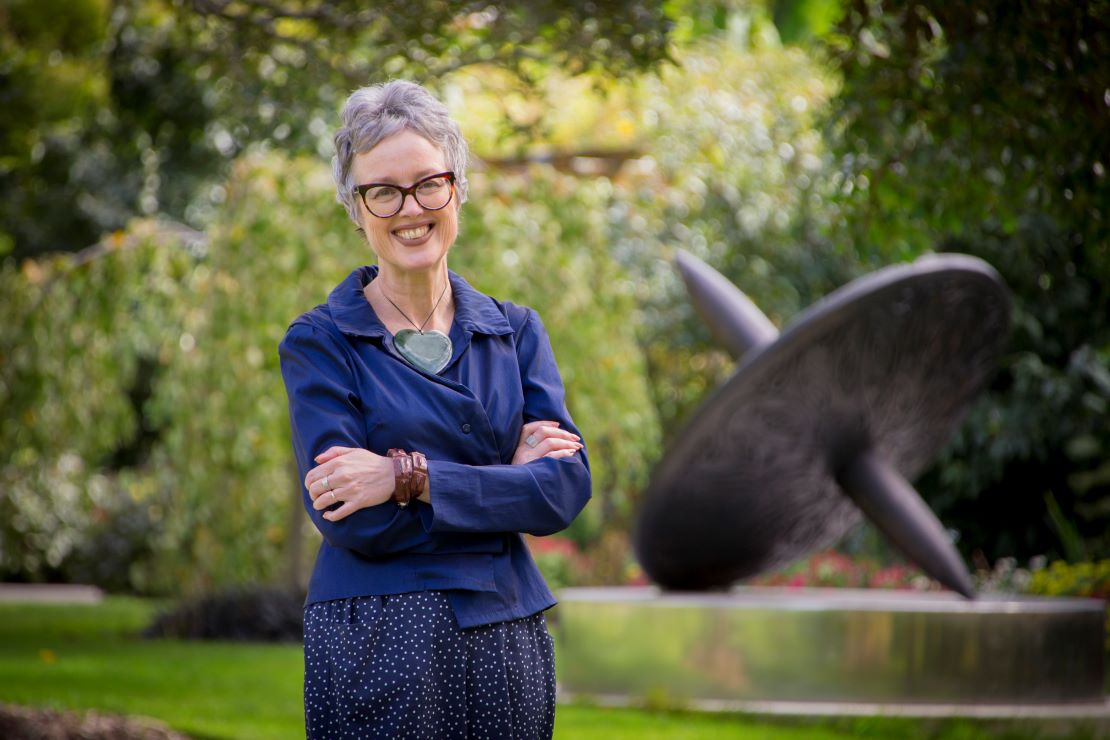
We are pleased to feature SabbaticalHomes member Giselle Byrnes, a colonial historian, university leader, and long-time advocate of the SabbaticalHomes community. Giselle has been a member since 2006, when she used the platform twice during her Fulbright fellowship at Georgetown University in Washington, D.C. She hasn’t stopped recommending it since.
Professor Byrnes is the Provost at Massey University Te Kunenga ki Pūrehuroa in Palmerston North, Aotearoa New Zealand. Her work as a historian and her international exchanges have given her a unique voice in contemporary conversations about identity, governance, and place.
Related: Professor Giselle Byrnes Biography
Aotearoa New Zealand and the Living Legacy of the Treaty

A Country That Takes Its History Seriously
New Zealand stands apart from many nations in how it relates to its indigenous people. Rather than treating Māori culture as a chapter in a history book, Aotearoa New Zealand is working to center it as a living, ongoing part of national identity. Aotearoa is the Māori name for New Zealand, often translated as “Land of the Long White Cloud,” and using both names together is increasingly common in New Zealand as a reflection of the country’s bicultural identity.
The country has two official languages: te reo Māori (1987) and New Zealand Sign Language (2006). That is not a symbolic gesture; it reflects a genuine national commitment to biculturalism that shapes everything from government policy to university life.
Te reo means “the language” and typically the phrase “te reo Māori” is used to differentiate the language from the name of the Indigenous people. English currently exists only by custom and practice, although there is a current bill before the New Zealand Parliament to make English an official language.
This stands in contrast to the experience of indigenous peoples in many other countries, where language and culture have been historically suppressed or marginalized rather than recognized and protected at a national level.
In New Zealand, the visible presence of Māori culture and the pride with which it is upheld reflects a different kind of relationship between a postcolonial nation and its first peoples, one that is still actively being built and is the result of generations of advocacy on behalf of Māori people.
The Treaty of Waitangi
At the heart of that relationship is the Treaty of Waitangi, also known as “Te Tiriti o Waitangi.” Signed in 1840 between the Crown and Māori rangatira, or chiefs, the Treaty is considered New Zealand’s founding document.
It is widely understood to affirm Māori tino rangatiratanga, a concept often translated as self-determination or authority over lands, resources, and taonga, or treasures, while also extending to Māori the rights and protections of the Crown.
As Professor Byrnes explains, “it is worth noting that ‘the Crown’ in New Zealand is not a single entity, but a complex, evolving collection of institutions and individuals (government ministers, departments, agencies) that act with state authority. Some scholars have argued that this ambiguity allows ‘the Crown’ to claim legitimacy while also avoiding clear accountability in contemporary negotiations regarding alleged breaches of the Treaty.”
The English and Māori texts of the Treaty are not identical, and much of the legal and institutional interpretation in New Zealand today stems from the ongoing effort to understand and apply those differences in practice.
In higher education, “giving effect” to the Treaty has come to mean something concrete and operational. Universities across New Zealand increasingly frame their work around three core principles:
- Partnership: working with Māori communities in governance, curriculum, and research, rather than making decisions unilaterally
- Protection: safeguarding the Māori language, knowledge systems, and delivering equitable outcomes
- Participation: ensuring Māori students, staff, and communities can engage fully in academic life
For visiting scholars, particularly those working in Indigenous studies, public policy, or the scholarship of decolonization, this makes New Zealand universities a research environment where these frameworks are being increasingly embedded in academic life rather than peripheral to it.
Related Reading about the Treaty of Waitangi:
- Claudia Orange, The Treaty of Waitangi, Wellington, 1987
- Ranginui Walker, Ka Whawhai Tonu Matou Struggle Without End, Auckland, 1990
- Ned Fletcher, The English Text of the Treaty of Waitangi, Wellington, 2022
An Academic Career Rooted in History
From the Waitangi Tribunal to Massey University
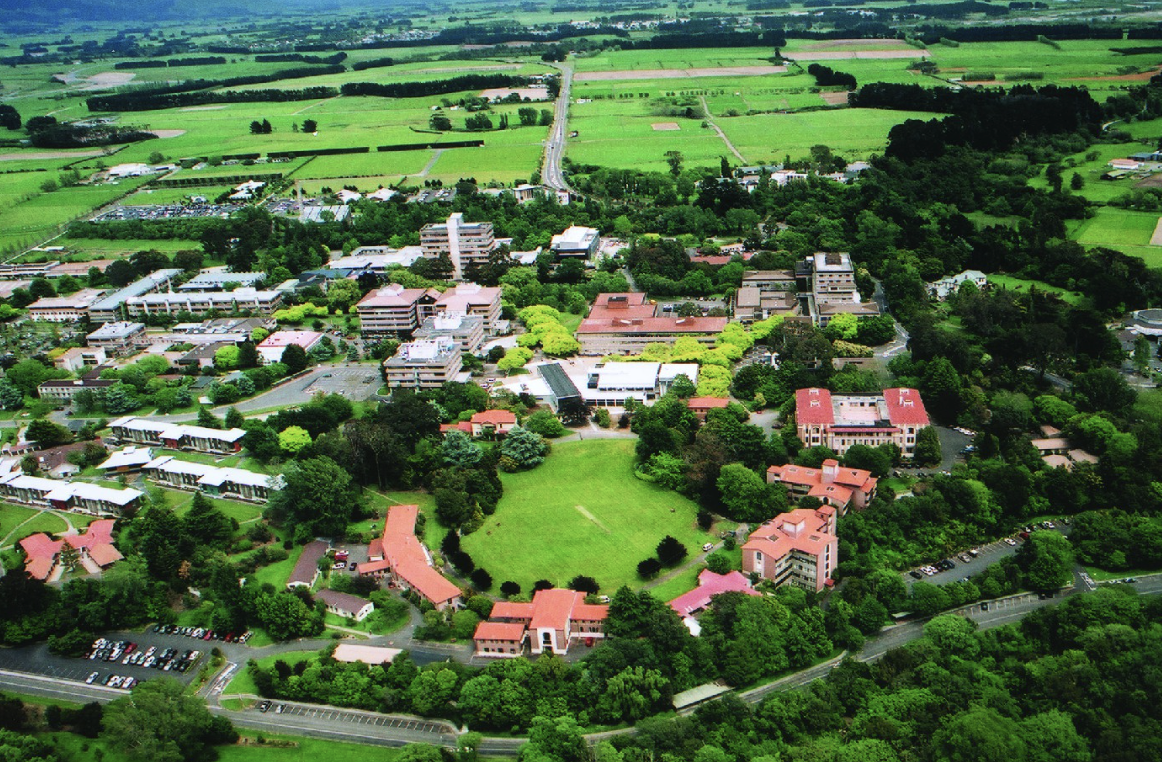
Professor Byrnes completed her undergraduate and master’s degrees at the University of Waikato and her PhD at the University of Auckland and has spent 30 years in academia, where she has taught the history of colonization, New Zealand history and public history.
Earlier in her career, she worked for the Waitangi Tribunal, the permanent commission of inquiry established to investigate breaches of the Treaty of Waitangi by the Crown and to make recommendations for redress. That experience gave Giselle a deeply grounded understanding of why history matters and how Treaty principles are applied, contested, and interpreted in practice.
As the foundation of her lifelong commitment to Indigenous reconciliation and truth-telling, that experience continues to shape how she approaches her role as a university leader today.
At Massey, Giselle is working with others to place the Treaty of Waitangi at the center of the university’s teaching and research, aligning institutional practice with what she sees as a genuine obligation to honestly advance the decolonizing mission. As she puts it, she is interested in “how we reckon with the past to deliver fair and equitable outcomes, especially for communities who have been historically excluded from the academy.”
Along the way, she has held academic and leadership roles at Victoria University of Wellington, the University of Waikato, and Charles Darwin University in Australia, and has served a period as President of the New Zealand Historical Association. Giselle edited The New Oxford History of New Zealand (2009), a multi-author general history which is now a standard text in undergraduate history programmes.
Her scholarship has also focussed on understanding processes of political reparation, nation-state atonement for historical injustices and the challenges and opportunities this creates for both academic and institutional leadership.
Higher Education and the Exchange of Ideas Across the Tasman
New Zealand and Australia share one of the most active academic corridors in the Southern Hemisphere. Geographically close, operating in comparable university systems, and connected by overlapping research priorities in areas like environmental science, public health, Indigenous scholarship, and Asia-Pacific studies, the two countries have long supported a steady flow of scholars, researchers, and ideas across the Tasman Sea.
For academics, this trans-Tasman mobility offers a practical kind of internationalism. A sabbatical or research visit in New Zealand can open access to a wider regional network spanning both countries, supporting comparative work, collaborative research, and professional relationships that extend well beyond a single campus.
All of New Zealand’s eight universities are research intensive and are ranked in the top 3% of universities worldwide. Universities New Zealand and Universities Australia, the peak bodies representing the university sectors in their respective countries, reflect how closely aligned the two systems are on issues affecting higher education in the region.
New Zealand has also developed a reputation as a highly welcoming destination for international scholars, international students and doctoral researchers, with immigration policies designed to attract research talent from abroad. For academics considering a sabbatical in the region, that combination of institutional openness, highly ranked universities, and close ties to Australia makes New Zealand a compelling base.
Related: For New Zealanders and Australians: Things to Consider Before Moving Between the Countries
Professor Byrnes’ Experience with SabbaticalHomes
A New Zealand Historian in Washington, D.C.
For a historian who has spent her career studying the relationship between the colonial past and the postcolonial present, spending a semester at Georgetown University was its own kind of full-circle moment. In 2006, Giselle was awarded a Fulbright fellowship to teach New Zealand Studies in Washington, D.C.
The Fulbright Program, which exists to foster cross-cultural understanding and academic exchange between the United States and countries around the world, was a natural fit for someone whose life’s work centers on how nations reckon with their histories. She traveled to Washington with her spouse and their two young children and successfully used SabbaticalHomes to find accommodation.
Finding a Home Away From Home
The family spent their first month in Capitol Hill in a self-contained apartment, a converted barber shop owned by two librarians who worked at the nearby Library of Congress. After that, they moved to Bethesda, Maryland for six months, into the home of two Georgetown academics who were themselves on sabbatical in Europe.
The family stayed in the house, had the use of both cars, took care of the family dog, and got to know the neighbors. And this was all arranged with a couple they had never actually met in person, just exchanged through emails and phone calls. It was, Giselle says, a fantastic experience and a true “home away from home.”
Her husband, the primary caregiver for their children that year, found more genuine community through the Bethesda neighborhood than through the Fulbright’s formal spousal programming, which at the time was largely designed for women spouses.
Giselle describes both stays as life-changing, and points to trust as the defining quality of the experience. “SabbaticalHomes is, at its heart, a high trust community,” she says, and one she believes was well ahead of its time, connecting academics around a shared need long before platforms like it became commonplace.
She has been recommending SabbaticalHomes to colleagues ever since. Most recently she pointed a neighbor toward the platform for an extended stay in Paris, and is currently browsing listings in Ireland for an upcoming trip. Nearly twenty years on from that first Fulbright summer in Capitol Hill, it remains her first stop when planning time abroad.
Related: SabbaticalHomes Listings in New Zealand
We love connecting with our members and sharing their stories! You can follow us on Twitter, LinkedIn, Facebook, Instagram, YouTube, and Pinterest.