

Which Seattle Neighbourhoods Offer the Best Environment for Academic Researchers?
Selecting the ideal location for a sabbatical or research fellowship requires a careful balance of professional proximity and personal tranquillity. Seattle, a city defined by its intellectual rigor and natural beauty, offers diverse districts that cater specifically to the needs of the global academic community. This comprehensive guide identifies the premier neighborhoods for scholars, ensuring a seamless transition for those focused on their next major contribution to higher education.
Finding the right environment is paramount for visiting scholars and resident academics seeking to balance rigorous study with the unique lifestyle of the Pacific Northwest. Seattle offers a diverse array of districts, from the bustling biotech corridors of South Lake Union to the serene, leafy streets of Wedgwood, each tailored to specific academic needs. This guide explores the most suitable areas for those seeking proximity to world-class institutions, quiet spaces for deep work, and seamless connectivity across the city.
Since 2000, SabbaticalHomes has been a trusted resource for academics and scholars seeking affordable, short-term furnished housing options, leveraging firsthand expertise to address the unique challenges of finding reliable accommodation.
Seattle neighborhoods for researchers offer a rare combination: world-class institutions, walkable urban living, and quiet residential pockets — all within a single, well-connected city. Whether you are a visiting scholar, a post-doctoral fellow, or a professor on sabbatical, the right neighbourhood can make or break your productivity. Seattle delivers on nearly every front, providing a supportive backdrop for “Minds on the Move.”
Here are the top Seattle neighbourhoods for researchers at a glance:
| Neighborhood | Best For |
|---|---|
| University District | UW-affiliated academics |
| Montlake | Senior scholars, quiet retreats |
| South Lake Union | Biotech & life sciences |
| First Hill | Medical researchers |
| Wedgwood | Remote work, writing |
| Bryant | UW commuters, cyclists |
| Capitol Hill | Post-docs, urban professionals |
| Beacon Hill | Diversity-focused researchers |
Seattle is often described as a city of neighbourhoods — and that reputation is well-earned. Each district has its own character, commute profile, and academic atmosphere. The challenge is knowing which one fits your work style, budget, and timeline.
Related:
- Seattle Scholar Stays: Navigating Guest House Rentals with Ease
- Stress-Free Living: Explore Seattle’s Best Furnished Rentals
- Find Your Focus: Inspiring Writing Retreats Near Seattle
Top Seattle Neighbourhoods for Researchers: An Overview
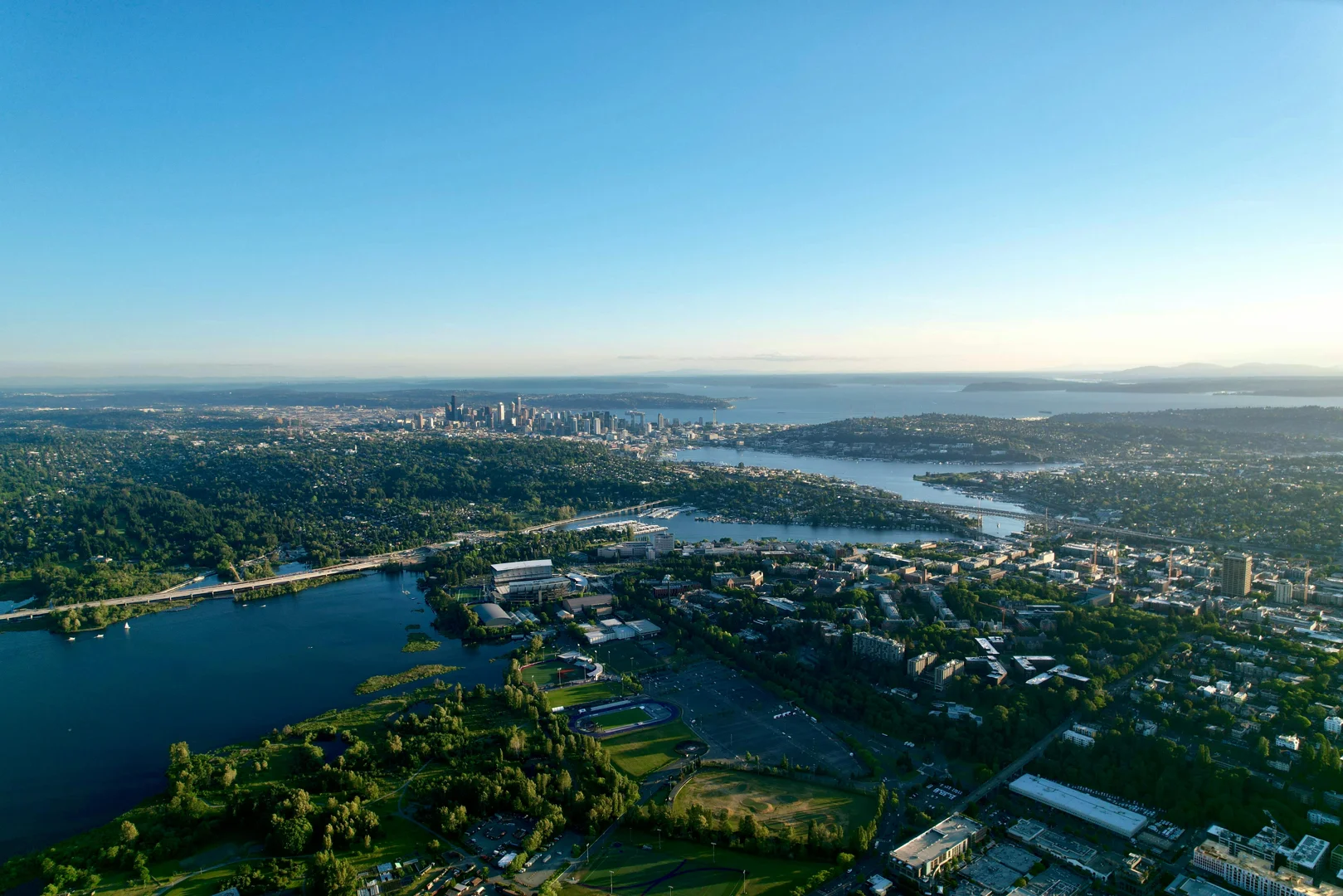
For the visiting scholar, understanding official boundaries is more than just a geography lesson; it is about finding the right professional networking opportunities and an academic atmosphere that fosters deep work. The city’s topography, defined by its seven hills and surrounding waterways, has naturally created pockets of specialization where researchers can find like-minded peers and essential resources.
When we look at the 2025 Best Neighborhoods for Young Professionals, areas like First Hill and South Lake Union consistently rank at the top. These rankings are driven by high millennial populations, access to job opportunities in tech and medicine, and a vibrant nightlife. However, for many in our community, the demographic profile of a neighborhood — such as the education level of neighbours and the presence of “urban sophisticates” — is just as important as the number of bars on the corner. A neighborhood that values quiet evenings and intellectual discourse is often the primary requirement for those on a rigorous research schedule.
The historical context of Seattle’s development has also played a significant role in shaping these districts. From the community activism that preserved the residential charm of Montlake to the rapid high-rise development in the Denny Triangle, Seattle’s neighborhoods are the result of decades of passionate local leadership. Whether you prefer the historic brickwork of a 1920s apartment or the sleek glass of a modern biotech hub, there is a corner of the Emerald City designed for your specific research needs. Understanding these nuances allows scholars to choose a location that not only provides a roof over their heads but also enhances their professional output and personal well-being during their stay.
The Academic Core: University District and Montlake
At the heart of Seattle’s intellectual life sits the University of Washington (UW). The surrounding areas, particularly the University District (or “U District”) and Montlake, serve as the primary hubs for the city’s academic population. This area has evolved from rural timber lands into a dense, urban-commercial district that supports one of the world’s leading research institutions.
Recent years have seen significant changes, including high-rise zoning that allows for residential towers up to 320 feet. This urbanization is balanced by the steadfast residential character of Montlake, where the Montlake Community Club has a long history of grassroots activism. Scholars often highlight the convenience of living near the Montlake Cut and the Northwest Fisheries Science Center, all while being a short walk from the serene Washington Park Arboretum. This proximity to nature is a vital component for many researchers who find that a walk through the greenery helps to synthesise complex ideas.
Why the University District is one of the best Seattle neighbourhoods for researchers
The U District is an intellectual powerhouse. With many residents holding a Master’s degree or higher, you are likely to find a fellow academic in every coffee shop. The neighborhood boasts a walkability score of 92/100, and the opening of the U District light rail station has made commuting to downtown or the airport incredibly efficient. For those working within the university’s extensive library system, living in the U District provides unparalleled access to the Suzzallo and Allen Libraries, which are essential for deep archival research.
For researchers, the amenities are unmatched. You’ll find world-class academic libraries, the legendary Scarecrow Video (housing over 140,000 titles), and a high-speed broadband infrastructure offering up to 8000 Mbps — essential for data-heavy research and international collaboration. With the majority of the population being renters, the area is perfectly suited for temporary stays and furnished academic rentals. While the central campus can be lively, the residential pockets to the north and west of the main thoroughfares offer the quietude necessary for scholarly focus.
Historical development and preservation in Montlake
If the U District is the energetic engine of the university, Montlake is its quiet library and one of the city’s most affluent and peaceful enclaves. The neighborhood is famous for its Tudor architecture and the “Spite House,” a local landmark built on a tiny wedge of land in 1925. This area is particularly favored by senior scholars and professors who appreciate the historic charm and the sense of community that comes with living in a well-preserved district.
Montlake’s history is defined by its resistance to disruptive infrastructure. Residents famously fought the R.H. Thomson Expressway and continue to advocate for the “Better Bridge” project to mitigate the impact of SR 520. For a senior scholar seeking a writing retreat, the quiet streets around Boyer Avenue and St. Demetrios offer a perfect academic retreat within walking distance of campus facilities. The ability to transition from a high-stakes laboratory or lecture hall to a peaceful, tree-lined street in under ten minutes is a luxury that Montlake provides in abundance.
Professional Research Hubs: First Hill and South Lake Union
While the U District focuses on traditional academia, South Lake Union (SLU) and First Hill are the epicenters of Seattle’s clinical and life sciences research. First Hill, affectionately known as “Pill Hill,” earned its nickname due to the high concentration of medical institutions, including Swedish Hospital and Virginia Mason Medical Centre. This area is a magnet for medical researchers and clinical fellows who need to be within minutes of their laboratories and patient care facilities.
South Lake Union has undergone a total transformation over the last two decades, largely driven by Vulcan development. What was once an industrial zone is now a global hub for innovation, as seen on any South Lake Union neighborhood map. The Denny Triangle, adjacent to SLU, is currently the fastest-growing neighbourhood in the downtown core, offering high-density living for researchers who want to be in the middle of the action. The synergy between private research institutes and public health organisations in this district is unique in the Pacific Northwest.
Evaluating South Lake Union as one of the premier Seattle neighbourhoods for researchers
For life sciences professionals, SLU is the place to be. It hosts a dense cluster of world-renowned organizations:
- Fred Hutch Cancer Centre
- Allen Institute for Brain Science
- UW Medicine
- Seattle Children’s Research Institute
This innovation district fosters a unique corporate-academic synergy. The area is highly walkable and filled with modern apartments designed for professionals. While it lacks the “old Seattle” charm of other districts, its proximity to labs and fellow researchers makes it an efficient choice for post-docs and visiting scientists. The presence of the Lake Union Park provides a necessary outdoor escape, allowing researchers to clear their minds while watching the seaplanes take off and land, a quintessentially Seattle experience.
First Hill: The historic heart of Seattle’s medical research
First Hill offers a different vibe entirely featuring a mix of historic brickwork and modern high-rises. It is a transit paradise with a 98 walk score and a 99 transit score, making it one of the most accessible points in the city for those who prefer not to maintain a vehicle during their fellowship.
Beyond the hospitals, First Hill is home to Seattle University and the Frye Art Museum. It offers quiet pockets that are surprisingly peaceful despite being so close to downtown. For a medical researcher, the ability to walk to work and then retreat to a furnished flat in a historic building is a significant draw. The neighborhood’s architecture, ranging from Victorian mansions to mid-century modern apartments, provides a diverse array of housing options for the discerning academic.
Quiet Retreats for Writing and Remote Study: Wedgwood and Bryant
For many of our members, the ideal Seattle neighborhoods for researchers are those that offer silence and space. Wedgwood and Bryant, located in Northeast Seattle, are the quintessential residential retreats. These areas are characterized by tree-dense avenues and a scholarly population that values privacy and quiet. These neighborhoods are often the first choice for researchers traveling with families, as they offer a stable environment and excellent local amenities.
Remote work and scholarly focus in Wedgwood
Wedgwood is an outlier in the best possible way. It is a community of “urban sophisticates” where a majority of the workforce works from home, creating a quiet daytime atmosphere that is perfect for deep concentration.
This makes Wedgwood an ideal location for a writing retreat or a long-term research project. The real estate trends show high value and low poverty, ensuring a stable, safe environment. Local community resources and archives further support a studious lifestyle, making it a top choice for those who do not need to be on campus every day. The neighborhood’s namesake, Wedgwood Rock, serves as a local landmark in an area that prides itself on its residential integrity and scholarly leanings.
Bryant: A biker’s paradise for University of Washington affiliates
Just south of Wedgwood lies Bryant, a neighborhood that serves as a perfect middle ground between the U District and the suburbs. With a bike score of 89, it is considered a “Biker’s Paradise,” largely due to its proximity to the Burke-Gilman Trail. This 20-mile multi-use recreational trail is a lifeline for commuting researchers, providing a scenic and safe route directly to the heart of the University of Washington campus.
Affiliates of the University of Washington often choose Bryant for its residential rows of townhomes and condos. It offers easy commutes to campus via bike or bus while remaining far enough away to escape the more transient campus bustle. The proximity to green spaces like Burke-Gilman Playground Park makes it a favorite for researchers who appreciate the ability to balance their intellectual labour with physical activity and outdoor recreation.
Urban Vibrancy and Connectivity for Post-Docs
For post-doctoral fellows and younger researchers, the social and cultural aspects of a neighborhood are often high priorities. Areas like Capitol Hill, Fremont, and First Hill offer high millennial populations and a 91+ walk score, ensuring that life outside the lab is just as engaging as the work inside it. These districts provide the energy that many find stimulating for creative problem-solving and interdisciplinary thinking.
The connectivity provided by the Sound Transit 1 Line has revolutionized how researchers move through the city. Commute times from Capitol Hill to the U District or South Lake Union are now measured in minutes, allowing for a broader range of housing options without sacrificing accessibility. This ease of movement is essential for “Minds on the Move” who may need to visit multiple campuses or research centres throughout the week.
Capitol Hill as a vibrant Seattle neighborhood for researchers
Capitol Hill is the heartbeat of Seattle’s nightlife and tech culture. It is dense, diverse, and filled with literary hangouts like the Elliott Bay Bookstore, which frequently hosts readings and academic discussions. For a researcher who thrives on energy, the Hill offers an unparalleled urban experience. The presence of Seattle Central College and proximity to Seattle University further cement its status as an intellectual hub.
Community-led projects and the historical resilience of areas like High Point show the depth of this neighborhood. While it can be noisier than the northern residential tracts, the access to Cal Andersen Park and the myriad of coffee shops makes it a fantastic home base for those who prefer to do their reading in a bustling environment rather than a silent office. The neighborhood’s reputation for inclusivity and diversity makes it a welcoming place for international scholars from all backgrounds.
Fremont and Beacon Hill: Diversity and innovation
Fremont, the self-proclaimed “Center of the Universe,” is tech-adjacent and artistically driven. It is home to the famous Fremont Troll and a community that prides itself on being unique. For researchers working in tech or social sciences, Fremont offers a creative backdrop for innovation. Its position along the Lake Washington Ship Canal provides beautiful views and easy access to the Burke-Gilman Trail, making it both a scenic and practical choice.
Beacon Hill, on the other hand, is one of Seattle’s most diverse neighborhoods. It is home to El Centro de la Raza and offers a rich cultural landscape that is highly valued by researchers specializing in sociology, urban planning, or public policy. Its landmarks and public transit access, including a dedicated light rail station, make it an excellent choice for researchers who value diversity and community activism as part of their living environment.
Frequently Asked Questions about Seattle Scholar Housing
How does the light rail impact commutes for researchers?
The Sound Transit 1 Line is a game-changer for the academic community. It connects the University District, Capitol Hill, Downtown, and Beacon Hill. For researchers, this means you can live in a vibrant area like Capitol Hill and reach the UW campus in under 10 minutes, or commute from the U District to the biotech hubs in South Lake Union with ease. The reliability of the light rail allows scholars to maximize their time, focusing on their work rather than navigating traffic.
Are there quiet residential areas near the University of Washington?
Yes. Montlake and Bryant are the best options for those who want to be close to the University of Washington but prefer a quiet, residential atmosphere. Both offer leafy streets, historic homes, and a peaceful environment conducive to writing and study. These areas provide a necessary buffer from the more active parts of the campus, allowing for a more focused and tranquil lifestyle during a research fellowship or sabbatical.
Conclusion
Finding your focus in the Emerald City is all about matching your research habits to the local geography. Whether you are seeking the high-energy academic core of the University District, the biotech synergy of South Lake Union, or the silent, tree-lined streets of Wedgwood, Seattle has a neighborhood that will feel like home. The city’s unique blend of natural beauty and intellectual rigor makes it an ideal destination for any scholar looking to make significant strides in their field.
Within the SabbaticalHomes academic community, a rental with house sitting duties is the most prevalent model and aligns perfectly with our foundational mission. This model has been the cornerstone of our community since 2000, fostering relationships built on trust and mutual benefit. House sitting is an option for all listing types (Home Rental, Home Exchange, Tenant Listings) and typically involves household help (garden, mail, pets) rather than being strictly rent-free. This approach ensures that homes are cared for while providing scholars with affordable and reliable accommodation.
At SabbaticalHomes.com, we understand that ‘Minds on the Move’ have unique requirements. Our platform is designed to help you find furnished rentals, home exchanges, or house sitting opportunities that include the home offices and easy commutes you need to be successful. We value the privacy, respect, and trust that the academic community is built upon, ensuring that every member can focus on their research and passions without the stress of housing uncertainty.
If you are planning your next relocation or fellowship, we invite you to find your Seattle home through our community of trustworthy hosts and tenants. Since 2000, SabbaticalHomes has been a trusted resource for academics and scholars seeking affordable, short-term furnished housing options, leveraging firsthand expertise to address the unique challenges of finding reliable accommodation.
Let us know what you think! Connect with us on X, LinkedIn, Facebook, Instagram, YouTube and Pinterest.