


Finding suitable accommodation for a six-month research stay in Paris involves understanding the nuances of the local rental market, from the flexible bail mobilité lease to the necessity of a comprehensive application dossier. This guide explores strategic neighborhood selection, budgeting for Parisian costs, and the advantages of using academic-centered platforms. By following these steps, visiting fellows can navigate the administrative hurdles of the French capital and secure a furnished home that supports their scholarly objectives.
Since 2000, SabbaticalHomes has been a trusted resource for academics and scholars seeking affordable, short-term furnished housing options, leveraging expertise to address the unique challenges of finding reliable accommodation.
Navigating the logistical hurdles of a six-month research stay in Paris is often cited as the most daunting aspect of an international fellowship. Paris remains a premier global hub for intellectual inquiry, housing prestigious institutions such as the Sorbonne, Sciences Po, and the Paris Institute for Advanced Study. However, the city’s rental market is notoriously tight, characterized by high demand, extensive paperwork, and a legal landscape that can be opaque to newcomers.
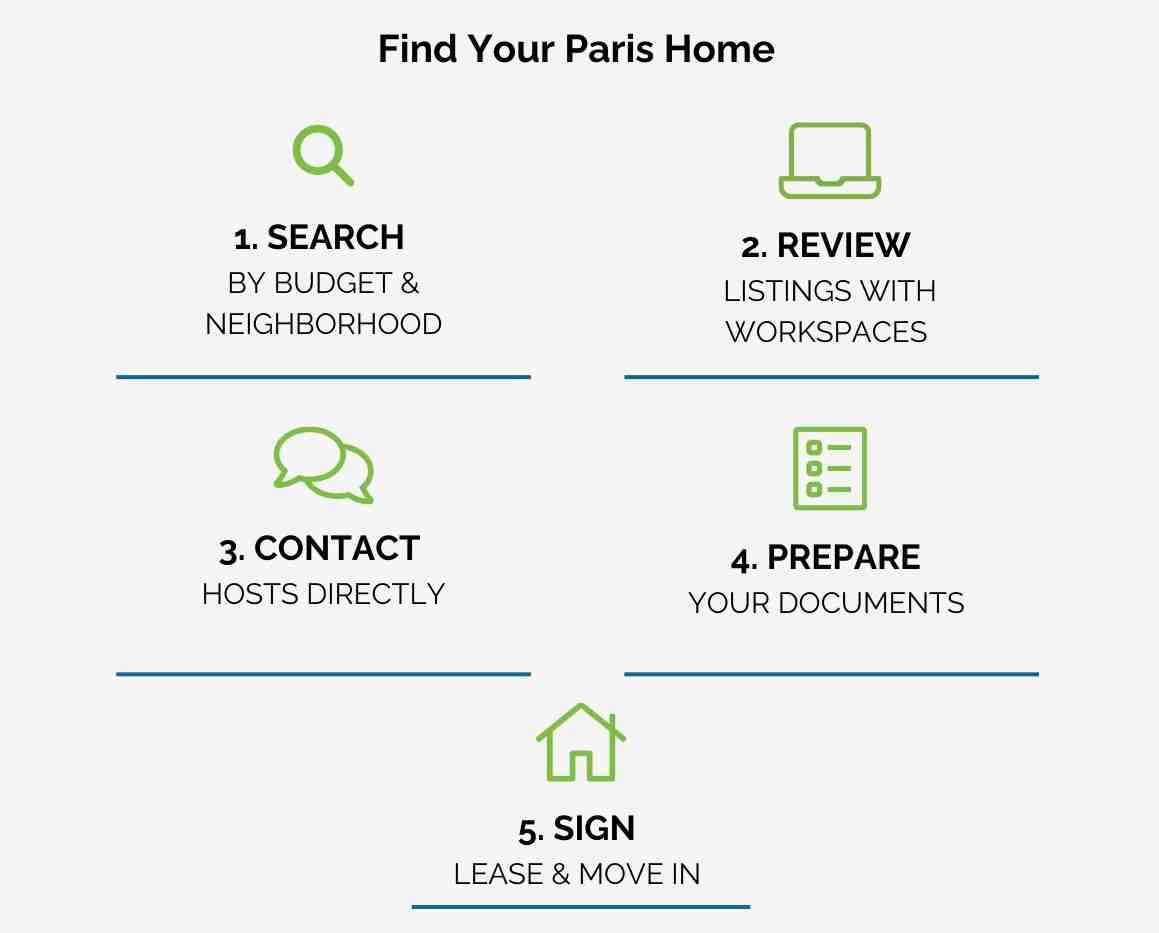
Key steps for a successful search include:
- Early Initiation — Begin your search four to six months before your arrival. University-affiliated residences like CIUP and CROUS are in high demand and often reach capacity months in advance.
- Lease Selection — Opt for the bail mobilité, a flexible lease designed for stays of one to ten months that eliminates the need for a traditional security deposit.
- Dossier Preparation — Compile a comprehensive folder containing your passport, visa, university hosting agreement, proof of financial means, and guarantor details.
- Financial Planning — Expect to pay between EUR €1000 and €1,500 for a furnished studio. Remember that CAF subsidies can significantly offset these costs.
- Academic Networks — Utilize peer-to-peer platforms to connect with hosts who understand the specific requirements of the scholarly community.
- Inventory Diligence — Conduct a meticulous état des lieux upon move-in to safeguard your interests and comply with French regulations.
For a six-month duration, the bail mobilité is typically the most advantageous legal framework. It offers the flexibility required for temporary academic appointments while providing robust legal protections for both parties. This guide walks you through every step — from choosing a neighborhood to setting up your utilities — so you can focus on your research, not your housing search.
Navigating the Search: How to Rent a Furnished Apartment in Paris for a 6-Month Fellowship
Securing a residence in the “City of Light” demands more than a sufficient budget; it requires a sophisticated strategy tailored to the local environment. Paris is classified as a zone tendue (high-demand zone), where the demand for housing vastly outstrips the available supply. For a researcher embarking on a six-month fellowship, the objective is to secure a space that serves as both a sanctuary and a functional workspace.
Successful relocations often occur when academics look beyond the conventional tourist market and engage with the scholarly ecosystem. At SabbaticalHomes.com, we recognize that rentals with house sitting duties are the most prevalent model and a cornerstone of the community since 2000. This model fosters a sense of mutual trust and responsibility, which is particularly valued by faculty members and researchers who may be traveling abroad themselves.
Managing the Timeline for Success
In the Parisian market, timing is the most critical variable. If your fellowship commences in September, you will be competing with a massive influx of returning faculty and postgraduate researchers. We strongly advise initiating your search at least four to six months in advance to ensure a smooth transition.
- Four to Six Months Prior: Research various neighborhoods and familiarize yourself with the specific requirements of the VLS-TS (Long-stay visa).
- Three Months Prior: This is the vital window for university-affiliated housing. Applications are highly competitive and should be submitted as early as possible.
- Two Months Prior: Finalize your “dossier.” In Paris, landlords often award a lease to the first applicant who provides a complete and qualified set of documents.
Identifying Reliable Academic Platforms
While general listing sites are available, they frequently lack the specific focus required for a research stay. Peer-to-peer networks like SabbaticalHomes are specifically engineered for our community. We focus on connecting “Minds on the Move” — individuals who prioritize a quiet environment, professional respect, and a home equipped with essential academic amenities like high-speed internet and a dedicated desk.
By using a dedicated platform, you can avoid the exorbitant fees associated with traditional agencies and connect with landlords who understand the temporary nature of a fellowship. As highlighted in this Member Testimonial, finding a host who is part of the academic world can significantly ease the transition into a new city.
Strategic Locations: Best Parisian Neighbourhoods for Researchers

Selecting the right location in Paris involves balancing your daily commute with your desired lifestyle. The city is organized into 20 arrondissements, each offering a distinct atmosphere and varying levels of proximity to academic institutions.
- The Latin Quarter (5th Arrondissement): This area remains the intellectual heart of Paris. Living here places you within walking distance of the Sorbonne and the historic Latin Quarter bookshops. It is a vibrant, central location ideal for those who wish to be at the centre of Parisian academic life.
- Saint-Germain-des-Prés (6th Arrondissement): Known for its literary history and proximity to Sciences Po, Saint-Germain-des-Prés is prestigious and centrally located. While it is one of the more expensive areas, it offers an unparalleled cultural experience.
- The 14th Arrondissement (Alésia/Parc Montsouris): A perennial favorite for visiting scholars, this residential area offers a quieter environment and better value for money. It is home to the CIUP and the expansive Parc Montsouris, providing a peaceful setting for writing and reflection.
- The 13th Arrondissement (Bibliothèque Nationale): For researchers spending significant time at the Bibliothèque nationale de France (BnF), the 13th is a practical and modern choice. It is well-connected and offers a range of contemporary furnished apartments.
Proximity to Academic Institutions
Your choice of residence should ideally minimize your daily commute. If your fellowship is based at a university in the southern part of the city, the 14th Arrondissement is highly recommended due to its excellent transport links, including the RER B line and various tramways. Conversely, if you are affiliated with institutions in the north or east, areas like the 10th or 11th arrondissements may be more suitable.
Balancing Affordability and Commute
While central Paris is highly desirable, looking slightly further afield can yield larger living spaces for the same budget. The Canal Saint-Martin in the 10th arrondissement is popular for its lively atmosphere and walkability. For those seeking a more local experience, the 20th arrondissement offers a diverse and affordable alternative, often providing furnished flats with more character and space than the tiny studios found in the historic centre.
Understanding the Legal Framework and Lease Types
The French legal system provides significant protections for tenants, which explains why landlords are so meticulous regarding documentation. For a six-month fellowship, it is essential to understand the specific lease types available in the market.
| Lease Type | Duration | Security Deposit | Best For |
|---|---|---|---|
| Bail Mobilité | 1 to 10 months | None Allowed | Fellowships & Research trips |
| Standard Furnished | 1 year (renewable) | 1-2 months’ rent | Stays exceeding 12 months |
| Code Civil | Flexible | Negotiable | Secondary residences or staff housing |
The French law on furnished rentals specifies the minimum inventory required for a property to be legally classified as “furnished.” This includes bedding, kitchen hobs, a microwave, a refrigerator, and basic kitchen utensils.
The Advantages of the Bail Mobilité
The bail mobilité is an excellent option for international fellows. Introduced to facilitate professional and academic mobility, this lease type strictly prohibits landlords from requesting a security deposit. It is non-renewable, which aligns perfectly with the fixed-term nature of a six-month fellowship. Given the absence of a deposit, landlords typically require a robust guarantee, often through the Visale scheme. You can review more info about SabbaticalHomes pricing to understand how our platform supports these arrangements.
Essential Rental Vocabulary for Fellows
Familiarising yourself with local terminology is vital for navigating listings and contracts:
- T2 or F2: Refers to a two-room apartment, typically consisting of one bedroom and a separate living area.
- Charges Comprises (CC): Indicates that the rent includes building maintenance and water, though personal electricity and internet are usually separate.
- État des lieux: The mandatory, detailed inspection of the property’s condition at the start and end of the lease.
- Dépôt de garantie: The security deposit, which is waived under a bail mobilité but required for other lease types.
Preparing Your Dossier: Essential Documents and the ‘Garant’ Requirement
In the competitive Parisian market, you do not simply “rent” an apartment; you must “apply” for it with a professional dossier. We recommend preparing this as a single, well-organized PDF file. Your dossier should include:
- Identification: A high-quality copy of your passport and your Visa Info.
- Professional Status: Your official university fellowship letter or the convention d’accueil (hosting agreement).
- Financial Evidence: Proof of your scholarship, grant, or the last three months of bank statements.
- Guarantor Information: Details of your French guarantor or your Visale certificate.
Managing the Guarantor Requirement
Most French landlords require a “garant” — a person residing and working in France who legally agrees to cover the rent if the tenant defaults. For international researchers, this can be a significant obstacle. Fortunately, the VISALE scheme offers a free rental deposit guarantee for international academics. While originally aimed at those under 30, it is increasingly available to researchers of all ages on specific contracts. If you do not qualify for Visale, private services such as GarantMe or SmartGarant can act as your guarantor for a modest fee.
Avoiding Scams in the Private Market
Vigilance is essential when navigating the private rental market. Be cautious of listings that appear unusually cheap or landlords who pressure you for immediate payment. Never transfer funds via wire transfer before you have viewed the property or signed a formal lease agreement. Using verified platforms and peer networks like SabbaticalHomes.com significantly reduces these risks by fostering a community built on mutual trust and academic integrity.
Related: Scam Prevention
Budgeting for Your Stay: Rents, Deposits, and Subsidies
Paris is a high-cost city, but with careful planning, the financial aspects of a fellowship can be managed effectively.
- Studio Apartments: Typically range from EUR €800 to €1,400 per month, depending on the arrondissement.
- One-Bedroom (T2): Generally costs between EUR €1,200 and €2,200 per month.
- Utilities: Budget approximately EUR €100 to €150 per month for electricity, heating, and high-speed internet.
- Insurance: Assurance habitation is a legal requirement and usually costs between EUR €15 and €30 per month.
Estimating Total Costs for a Six-Month Stay
In addition to rent, you should account for potential agency fees if you use a traditional realtor, which can often equal one month’s rent. By utilizing SabbaticalHomes.com, you can often connect directly with property owners, potentially saving a significant amount in administrative fees.
Accessing Financial Assistance
International fellows should not overlook the CAF (Caisse d’Allocations Familiales). Most researchers on a VLS-TS visa are eligible for housing subsidies such as the APL (Aide Personnalisée au Logement). This subsidy can provide between EUR €100 and €200 per month, which is a substantial contribution toward your living expenses.
Finalising the Rental: From Inventory to Utilities
Once you have secured your keys, the état des lieux (inventory of fixtures) becomes your most critical task. This document provides a comprehensive description of the property’s condition, from the state of the flooring to the number of kitchen utensils. If a pre-existing issue is not documented during the move-in inspection, you may be held financially responsible upon your departure.
Setting Up Essential Services
If your rental agreement is not “all-inclusive,” you will need to establish accounts for various utilities. This typically requires a French bank account or a RIB (Relevé d’Identité Bancaire).
- Electricity and Gas: The primary providers in France are EDF and Engie. Many apartments now use the Linky smart meter, which simplifies the process of tracking usage.
- Internet and Connectivity: Paris has excellent fibre-optic coverage. Providers such as Orange, Free, and SFR offer competitive monthly plans, often including international calling.
- Mandatory Insurance: You must present proof of Assurance Habitation to your landlord on the day you receive your keys. This insurance protects you against risks such as fire, water damage, and theft.
Integration into Parisian Life
A six-month fellowship is an opportunity to truly inhabit a Parisian neighborhood. Establish a routine by visiting your local boulangerie and exploring the Marché des Enfants Rouges for fresh, local produce. If you are residing in the 7th arrondissement, a stroll down Rue Cler offers access to some of the city’s finest speciality food shops. These daily interactions are what transform a temporary research stay into an authentic and memorable Parisian experience.
Frequently Asked Questions about Academic Housing in Paris
What is the most suitable lease for a six-month research stay?
The bail mobilité is specifically designed for professional and academic stays lasting between one and ten months. It is the ideal choice for researchers as it prohibits security deposits and offers a simplified notice period for termination.
Is a French guarantor mandatory for international scholars?
While many private landlords prefer a guarantor based in France, international academics have several alternatives. The Visale service provides a free guarantee for eligible researchers, and private companies like GarantMe offer similar services for a fee, making your application more competitive.
Are international fellows eligible for housing subsidies?
Yes, most international researchers holding a valid VLS-TS visa are eligible to apply for APL or ALS subsidies from the CAF. These payments can significantly reduce the net cost of your monthly rent.
How can I ensure my apartment is suitable for research?
When using SabbaticalHomes.com, you can communicate directly with hosts to confirm the availability of essential amenities such as a quiet workspace, high-speed internet, and proximity to libraries or university campuses.
Conclusion
Securing the ideal home base for your research journey in Paris is an achievable goal when you are equipped with the right information and resources. By prioritizing academic-specific platforms and understanding the nuances of French rental law, you can find a residence that supports both your professional productivity and your personal well-being. SabbaticalHomes remains the premier resource for “Minds on the Move,” connecting a global community of scholars with trustworthy, furnished accommodation tailored to the unique requirements of the academic lifestyle.
Let us know what you think! Connect with us on X, LinkedIn, Facebook, Instagram, YouTube and Pinterest.