

How Can Researchers Secure the Ideal Temporary Housing for Boston Post-Docs with a Home Office?
This comprehensive guide provides essential strategies for postdoctoral researchers seeking temporary housing in Boston. It covers the unique challenges of the local rental market, identifies key neighborhoods near major research hubs like Harvard and MIT, and highlights the importance of dedicated home office spaces. By exploring specialized platforms like SabbaticalHomes.com and understanding the benefits of academic house sitting, scholars can secure professional, furnished accommodation that supports both their rigorous research demands and their personal wellbeing during their residency.
Finding suitable accommodation in Boston requires balancing proximity to world-class research institutions with the need for a quiet, professional workspace. This guide explores the most effective strategies for securing furnished rentals that cater specifically to the requirements of postdoctoral scholars. By prioritizing dedicated home offices and reliable transport links, academics can ensure a seamless transition into the city’s vibrant intellectual community.
Temporary housing for Boston post-docs with a home office space is one of the most pressing practical challenges facing scholars relocating to one of the world’s most competitive academic cities. Boston and Cambridge are home to MIT, Harvard, the Longwood Medical Area, and Northeastern — but the city’s tight rental market and high costs make finding a furnished, work-ready space genuinely difficult. For the visiting researcher, the search is not merely for a bed, but for an environment that supports the rigorous demands of high-level intellectual labour. The pressure to produce high-impact research begins the moment a fellowship commences, and having a stable, quiet base is the primary factor in achieving those early milestones.
Boston is often referred to as the “Athens of America” due to its dense concentration of higher education institutions. This reputation, while prestigious, creates a unique set of logistical hurdles for incoming faculty and researchers. The city’s rental cycle is famously rigid, with a vast majority of leases beginning and ending on the 1st of September. This “Allston Christmas” phenomenon, where thousands of residents move simultaneously, can be overwhelming for a scholar arriving from overseas or another state. For a post-doctoral fellow whose grant might begin in January or June, this synchronized market can feel impenetrable. Furthermore, the standard of “furnished” can vary wildly, from a spare mattress in a shared flat to a fully equipped executive suite. For those whose work requires deep focus, the latter is not a luxury but a prerequisite for success.
Here is a quick overview of the best options available right now for those seeking a professional base:
| Option | Location | Price (approx.) (USD) | Home Office? | Utilities Included? |
|---|---|---|---|---|
| Charles St Post-Doc House | Cambridge (near MIT) | $750–$950/bedroom | Shared workspace | Yes |
| 28 Cogswell Ave | Porter Square, Cambridge | $1,100/bedroom | Shared workspace | Yes |
| 29 Ware St / Harvard Yard | Cambridge | $1,600/studio | Private studio | Yes |
| SabbaticalHomes Jamaica Plain listing | Jamaica Plain, Boston | $1,500/month | Dedicated office | Yes |
| Quasar Co-living | Cambridge/Somerville | $400–$1,500/month | Shared working space | Varies |
| Northeastern Summer Housing | Boston (West Village) | $230–$400/week | No dedicated office | Partial |
Boston’s rental market moves fast, and the competition for high-quality, quiet spaces is fierce. Many post-docs arrive without a permanent address lined up, relying on short-term hotels or shared flats that simply are not set up for focused research work. A quiet desk, reliable high-speed internet, and a private space to think are essential for a post-doc. The transition into a new fellowship is demanding enough without the added stress of an inadequate living situation.
Related:
- Harvard & BU Postdoc Housing: Your Essential Guide
- Navigating Sabbatical and Sublet Options in Boston
- Navigating University and Graduate Housing Options
Finding Temporary Housing for Boston Post-Docs with a Home Office
Securing a productive base in Boston often means looking beyond traditional flat complexes. For a postdoctoral fellow, the “home” is frequently an extension of the laboratory or library. We have found that the most successful relocations involve housing that is specifically curated for the academic lifestyle, where the rhythm of the household matches the intensity of the research schedule. This alignment is crucial for maintaining the mental stamina required for long-term projects and grant writing.
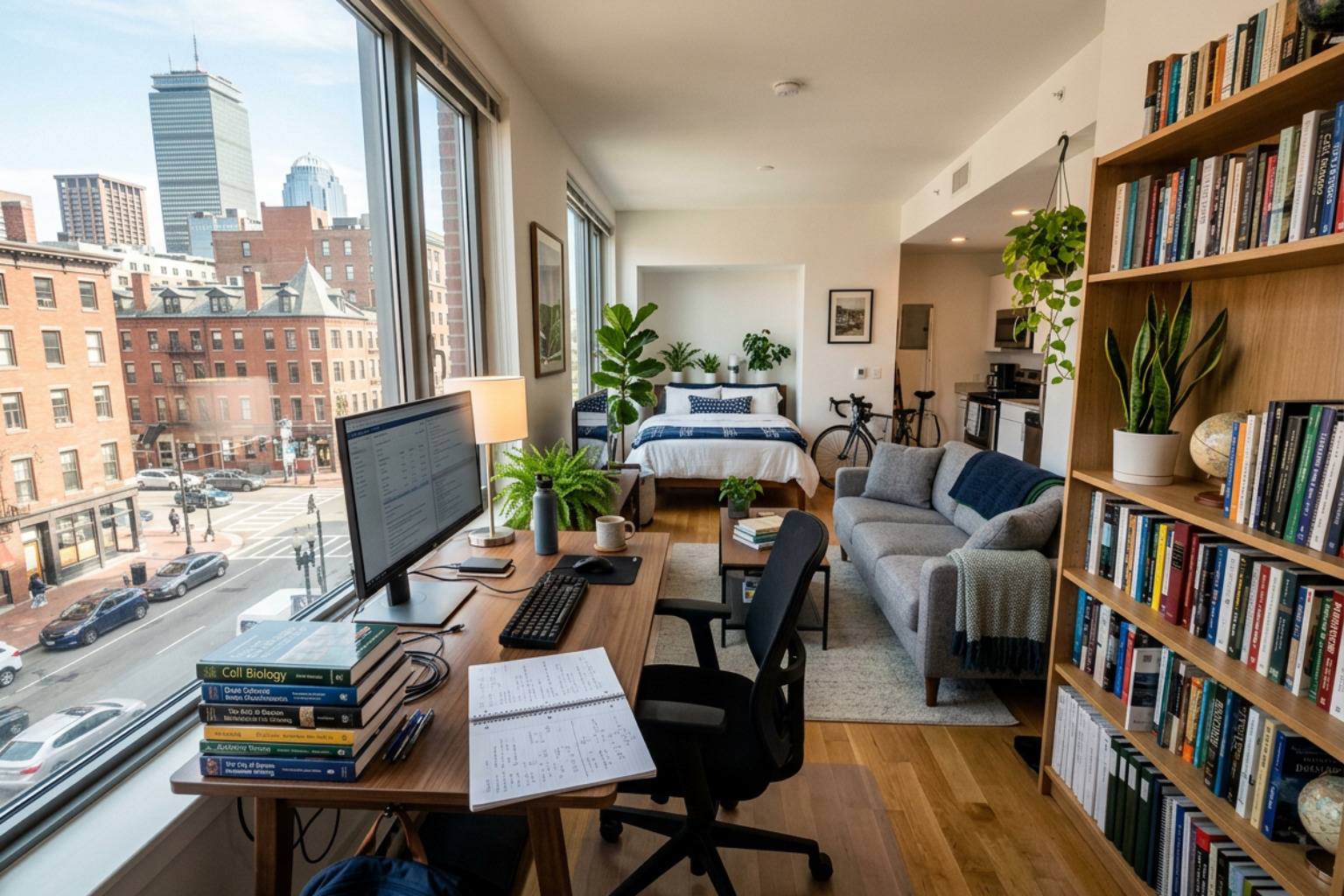
When searching for temporary housing for Boston post-docs with home office capabilities, scholars should look for environments that foster a “community of minds.” Locations like the post-doc houses on Charles St or Cogswell Ave in Cambridge are excellent examples. These properties often host a small group of researchers from Harvard, MIT, or MGH, creating a quiet, studious atmosphere where the resident culture respects the need for deep focus. This shared understanding of the academic workflow is invaluable; it means no loud parties on a Tuesday night when you have a grant deadline, and perhaps a stimulating conversation over coffee about methodology. Living amongst peers who are also navigating the pressures of the tenure track or advanced research can provide a unique form of social support that is often missing in standard commercial rentals.
Essential Amenities in Temporary Housing for Boston Post-Docs with Home Office
What makes a rental truly “post-doc ready”? In our experience, high-speed internet is the non-negotiable baseline. Many university-managed or academic-focused rentals, such as those near the Boston University Wheelock College of Education and Human Development, prioritize robust Wi-Fi to support data-heavy research and virtual collaborations. Beyond the digital connection, the physical environment must be conducive to long hours of cognitive effort. A cramped corner in a noisy kitchen is rarely sufficient for the level of concentration required for peer-reviewed publications.
Other essential amenities include:
- Natural Light: Vital for maintaining wellbeing during long writing sessions, especially during Boston’s shorter winter days. A basement flat might seem like a bargain, but the lack of sunlight can take a toll on productivity and mood. Look for units with large windows or southern exposures.
- Ergonomic Furniture: A dedicated desk and a supportive chair are far superior to working from a dining table. When reviewing listings, look for photos that show a proper workspace rather than just a “laptop-friendly” surface. Your physical health is an investment in your research output.
- In-unit Laundry: A significant time-saver for busy researchers balancing tight lab schedules. In older Boston brownstones, this is a premium feature that is well worth the extra investment, as it eliminates the need for time-consuming trips to a local laundromat.
- Quiet Zones: Thick walls or top-floor units help minimize the urban noise of a bustling city like Boston. Consider the proximity to “T” tracks or major thoroughfares which can be surprisingly loud. A quiet environment is not just about silence; it is about the absence of unpredictable interruptions.
Navigating the Search for Temporary Housing for Boston Post-Docs with a Home Office
The Boston rental cycle is notoriously rigid, often revolving around a 1 September start date. However, post-doctoral fellowships can begin at any time. This is where the flexibility of SabbaticalHomes.com becomes invaluable. Our members often offer mid-semester starts and flexible durations that traditional landlords might refuse. This flexibility allows scholars to align their housing with their research contracts rather than the local real estate market’s whims. It also provides an opportunity to find short-term “bridge” housing while searching for a more permanent arrangement.
When applying, be prepared for typical Boston requirements: first month’s rent, last month’s rent, and a security deposit are standard. However, some institutions offer support. For instance, the Boston Children’s Hospital Lease Guaranty Program can help eligible post-docs by guaranteeing these upfront costs for participating landlords. Always check if your specific research institution provides similar “off-campus” support resources or vetted listing portals. Being part of the SabbaticalHomes community also provides a layer of trust, as many hosts are fellow academics who understand the financial constraints and professional integrity of visiting scholars. This mutual respect often leads to more favorable lease terms and a smoother moving experience.
Strategic Locations Near Major Research Institutions
Location in Boston is less about mileage and more about “T” (subway) access. The city is a collection of distinct neighborhoods, each serving different research hubs. Understanding the geography of the city is essential for minimizing commute times and maximizing research hours. A twenty-minute walk might be pleasant in May, but in the middle of a February blizzard, proximity to a subway station becomes a critical factor in your daily productivity.
- Cambridge (Kendall Square & Harvard Square): The heart of MIT and Harvard. Expect higher rents but unparalleled proximity to labs. Kendall Square is often cited as the most innovative square mile on the planet, making it a highly desirable, albeit expensive, location for those in biotech and engineering. Living here means you are steps away from some of the world’s most advanced research facilities and a constant stream of academic seminars.
- Longwood Medical Area (LMA): Home to Harvard Medical School, Boston Children’s Hospital, and Dana-Farber. Neighborhoods like Brookline and Jamaica Plain are the primary residential choices here, offering a mix of urban convenience and green spaces. The LMA is a dense, bustling hub, and finding a quiet retreat nearby is essential for decompressing after a long day in the lab.
- Porter Square: A fantastic middle ground. It is an 8-minute walk to the Red Line, making it convenient for both Cambridge and downtown Boston. It offers a slightly more relaxed pace than the frantic energy of Harvard Square, with excellent local amenities including bookshops and independent cafes.
For those affiliated with the MBTA system, living near a Red, Green, or Orange line station is the most effective way to ensure a manageable commute. The Red Line is the primary artery for Harvard and MIT, while the Green Line serves the LMA and Boston University. The Orange Line provides access to the Tufts Medical Center and parts of Northeastern University.
Commuting from Greater Boston Neighbourhoods
If you require more space for a dedicated home office, looking slightly further afield into Greater Boston can yield better value. Many researchers find that a twenty-minute commute is a fair trade-off for a spare room that can be converted into a full library or study. This extra space can be the difference between a cramped living situation and a professional environment that supports deep work.
- Somerville: Offers a vibrant, intellectual culture and is often more affordable than central Cambridge. Davis Square and Union Square are popular pockets for researchers who enjoy independent bookshops and craft coffee. Somerville has a distinct, community-focused feel that many academics find appealing.
- Brookline: Consistently ranked as a top suburb, offering safe, leafy streets and direct Green Line access to the LMA. It maintains a sophisticated, quiet atmosphere that is highly conducive to academic life. The Coolidge Corner area is particularly popular for its historic cinema and excellent bookshop.
- Lexington: For those who prefer a quieter, more suburban environment, there are excellent homes to rent in Lexington that provide the space needed for a full home office, though a car or longer commute may be required. This is often a preferred choice for senior researchers or those relocating with families who value high-quality schools and open spaces.
University Shuttles and Public Transit Connectivity
Many post-docs overlook the extensive private shuttle networks. Harvard’s M2 shuttle is a lifeline for those living in Cambridge but working in the Longwood Medical Area; it is free with a university ID. Similarly, MASCO shuttles serve various points around the city for medical researchers. These shuttles often provide a more direct and comfortable route than the standard MBTA lines. If you enjoy cycling, Boston’s Bluebikes program is an excellent way to navigate the city, though we advise having a “Plan B” for the snowy months! The city has made significant strides in bike lane infrastructure, particularly along the Charles River, providing a scenic and healthy commute for those in the Cambridge and Back Bay areas. Cycling can often be faster than the “T” for short cross-town trips, especially during peak hours.
Managing Costs and Logistics for Academic Relocation
Boston is one of the most expensive cities in the United States. To manage your budget, it is helpful to understand the tiers of available housing and the various models of occupancy that exist within the academic community. Relocation is not just a physical move; it is a financial strategy that requires careful planning and a clear understanding of your stipend’s purchasing power in the local market.
Financial Resources and Lease Support
Beyond university stipends, look for ‘all-inclusive’ rentals. Many academic hosts on SabbaticalHomes include utilities, heat, and high-speed internet in the monthly rent. This prevents the ‘sticker shock’ of Boston’s high heating costs in the winter, which can be substantial in older, poorly insulated buildings. If central Boston is too costly, consider searching for homes to rent in Wakefield, where you might find more spacious accommodation for your budget without sacrificing a reasonable commute. Wakefield offers a more traditional New England town feel while remaining connected to the city via the Commuter Rail.
The House Sitting Model for Scholars
Within the SabbaticalHomes.com academic community, a rental with house sitting duties is the most prevalent model and a cornerstone of the community since 2000. This model has been the foundation of our platform, fostering relationships built on trust and mutual benefit. House sitting is an option for all listing types (Home Rental, Home Exchange, Tenant Listings) and typically involves household help (garden, mail, pets) rather than being strictly rent-free.
Related: House Sitting: The Art of Helping Out for a Reduced Rental Rate
For a post-doc, this can be an ideal arrangement. It often provides access to a much larger home than a standard stipend would allow, including a proper study or library. In exchange, the scholar provides peace of mind to the homeowner, who may be away on their own sabbatical or research trip. For example, a scholar might find a peaceful retreat by looking for homes to rent in Nahant, a coastal community that offers the perfect environment for a writing-intensive fellowship. This model relies on the shared values of the academic community: respect for property, intellectual integrity, and a commitment to mutual support. It is a system that has successfully served thousands of researchers for over two decades, proving that the academic network is one of the most reliable resources for finding a home.
Frequently Asked Questions about Boston Scholar Housing
What are the typical costs for furnished post-doc housing?
For a private bedroom in a shared ‘post-doc house’ in Cambridge, expect to pay between USD $750 and $1,100 per month, usually with utilities included. Private studios or one-bedroom flats near major institutions generally start at USD $1,500 and can exceed $3,100 depending on the neighborhood and amenities. Prices tend to peak for September starts, so if your fellowship allows for a mid-year move, you may find more room for negotiation. It is also worth noting that many landlords require a broker’s fee, which can be equal to one month’s rent, though many SabbaticalHomes.com listings are direct-to-owner, avoiding this extra cost.
How can scholars ensure their temporary housing provides an optimal home office setup?
We recommend asking potential hosts for specific details: Is there a desk? What is the internet speed? Is the area quiet during the day? Listings on SabbaticalHomes often highlight these features because our hosts understand the academic workflow. It is also worth asking about the “zoom-readiness” of the space — is there a neutral background and good lighting for virtual conferences? Additionally, check for the proximity of local libraries or academic cafes as a secondary workspace option.
Which neighborhoods offer the best commute to the Longwood Medical Area?
Brookline and Jamaica Plain are the gold standards for the LMA. Both offer “safe walking access” or short commutes via the Green Line or bus routes. Mission Hill is also a popular, though more densely populated, alternative. Many researchers also find that the South End provides a sophisticated urban environment with a manageable commute to the medical campus via the Silver Line or private shuttles. Each of these areas has a distinct character, from the leafy streets of Brookline to the artistic vibe of Jamaica Plain.
Are there specific resources for international post-docs?
International scholars should ensure their housing provider is comfortable with the documentation required for J-1 or H-1B visa holders. SabbaticalHomes is an international platform, and our hosts are often very experienced in welcoming scholars from around the globe, making the transition much smoother than dealing with a standard commercial letting agent. Many universities also have an International Office that can provide guidance on local customs and legal requirements for renters in Massachusetts.
Is it possible to find housing that allows pets?
While many traditional Boston rentals have strict “no pet” policies, the academic community on SabbaticalHomes is often more flexible. Many hosts are pet owners themselves and understand the importance of bringing a companion. However, it is essential to be upfront about your pet in your initial enquiry and be prepared to provide references or an additional deposit. Finding pet-friendly housing in the city can take longer, so we recommend starting your search at least three to four months in advance.
Conclusion
Relocating for a post-doctoral fellowship is a significant milestone in an academic career. By choosing temporary housing for Boston post-docs with a home office space that aligns with your professional needs, you set the stage for a productive and rewarding residency. Whether you are looking for a bustling co-living space in Somerville or a quiet garden suite in Jamaica Plain, the right environment is out there to support your research breakthroughs. The city of Boston offers an unparalleled intellectual atmosphere, and finding the right home is the first step in becoming part of this historic academic community.
At SabbaticalHomes, we are proud to support ‘minds on the move’ by providing a platform where privacy, respect, and academic needs come first. We invite you to explore our latest Boston home rentals and find the perfect base for your next research breakthrough. Our community is built on the belief that when scholars are well-housed, they are free to focus on the work that changes the world. Since 2000, SabbaticalHomes has been a trusted resource for academics and scholars seeking affordable, short-term furnished housing options, leveraging firsthand expertise to address the unique challenges of finding reliable accommodation. A Place for Minds on the Move.
Let us know what you think! Connect with us on X, LinkedIn, Facebook, Instagram, YouTube and Pinterest.